Wyrd Outlook by Grogh — Ghostwritten by Vikki Vexum
Sunbeams Through a Distortion Pedal: CRINGE Christian Influence in Counterculture
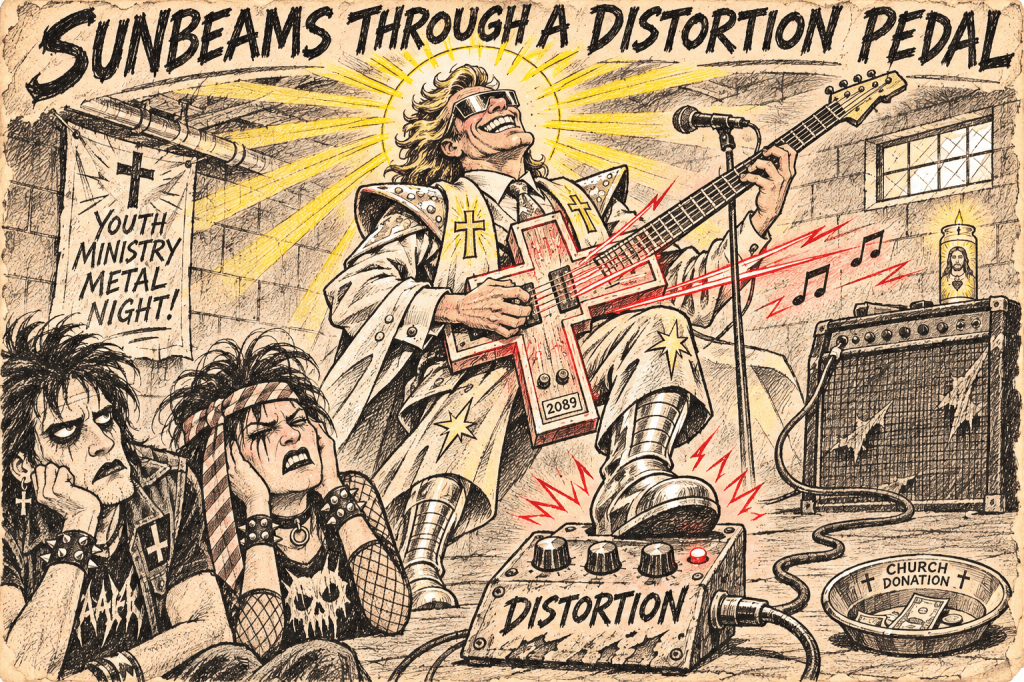
A church basement. An amplifier. A growling voice telling me to surrender. It’s quite a leap from Corrosion of Conformity to Crusader of the Cross.
I was raised hearing that Jesus wanted me for a sunbeam. Be bright. Follow his guidance. Listen to the preacher and congregation. Then, roughly fifteen years ago in Indianapolis, I found myself inundated with Christian metal: black shirts, aggressive vocals, and a familiar religious message coming through a distortion pedal, belting out the same sad tunes of conformity.
It felt contrived. Friends of mine noticed it too, and we agreed—to put it lightly—it blew goats.
Metal meant freedom to me. Personal power. Rebellion. Thinking for myself. A necktie could become a headband; you didn’t have to wear the damn thing where authority put it. Almost every metalhead I’ve personally encountered has had a problem with organized religion—99.9% by the Captain’s extremely unofficial figuring. Hearing institutional obedience dressed in that sound was a TRAIN WRECK I couldn’t ignore.
And Christian metal has always sucked, without exceptions, if you ask me. It sucked then. It sucks now. It’ll probably suck in 2089, with laser-cross guitars.
The promotion impressed me considerably more than the music. The people selling every contrived ministry band as the next great thing should have become used-car salesmen. Every last one of them.
Churches could supply a room, a stage, and an audience while other bands struggled to secure a dive-bar booking without assembling an entire lineup themselves. From where I stood, religious alignment opened doors the songs hadn’t earned. Having a congregation behind you didn’t make your breakdown better.
Pickles heard it too
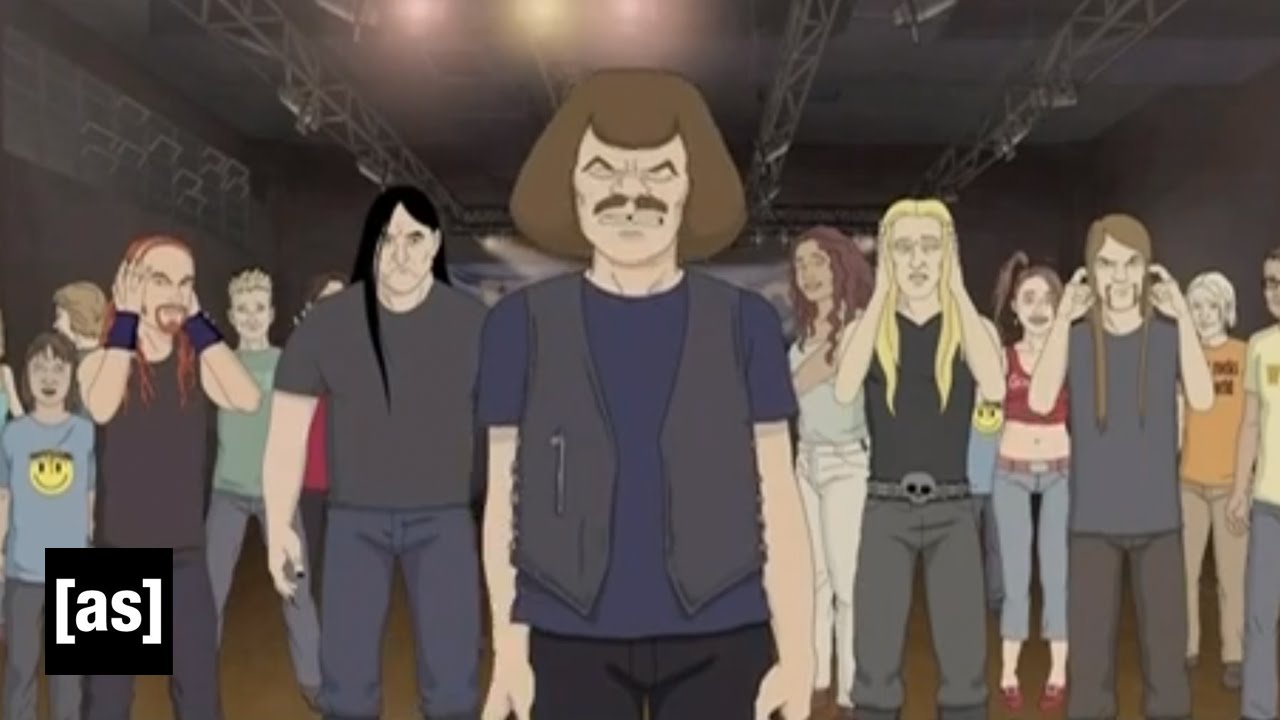
In Metalocalypse’s “Religionklok,” Dethklok encounters the fictional Christian rock band Prayer Bolt during Murderface’s search for religion. Pickles complains:
“I grew up in the Midwest, I don’t need to see another Christian rock band.”
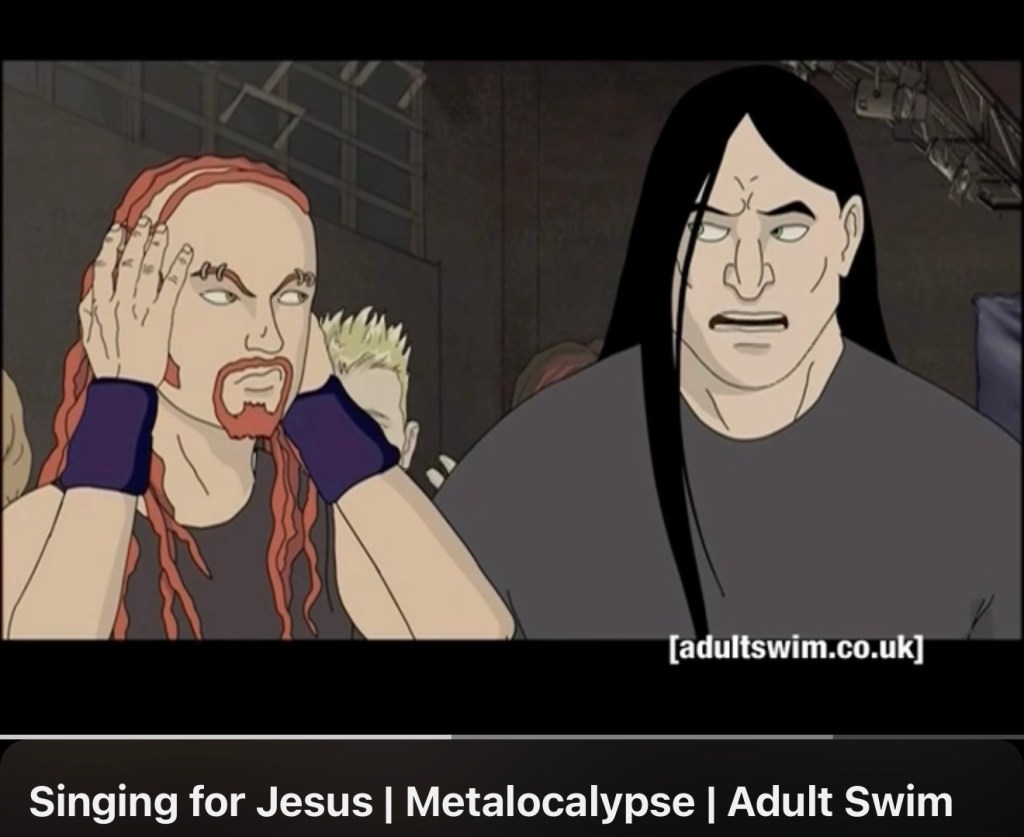
Same, Pickles. I heard too many in Indianapolis. The urban grit didn’t save my ears.
That episode aired in 2006. The irritation was already recognizable enough to become a joke. (imdb.com, en.wikipedia.org)
Well-known musicians expressed their frustration, too.
In a July 2011 Noisecreep interview, Asking Alexandria guitarist Ben Bruce questioned Christian bands’ claims about performing for God and objected to preaching during shows:
“It’s fine if you believe in God. I don’t care. Don’t preach on stage!”
That lands squarely in the era I remember getting burned out on the same grift. (noisecreep.com)
Ben Bruce’s interview with Noisecreep
In a statement reproduced by Metal Injection in April 2014, Attila frontman Chris Fronzak explained that he wanted rebellious music growing up:
“I absolutely despised the trend of ‘Christian Metal’”
He said the trend hadn’t made sense to him and still didn’t. That metal heresy sounded familiar to me. (metalinjection.net)
Chris Fronzak’s statement, reproduced by Metal Injection
Let’s put the organizations on the table
Do organized Christian efforts to influence music and entertainment exist?
Yes. Their own descriptions give us names, objectives, and methods.
Actors, Models & Talent for Christ—AMTC—recruited performers for entertainment careers. A May 2013 case study from marketing partner FrontGate Media describes promoting more than 25 regional audition events through targeted outreach. AMTC connected Christian performers with entertainment agents; FrontGate helped bring more prospective talent to the auditions. (frontgatemedia.com)
I remember repeated advertisements seeking Christian performers—singers, models, actors, seemingly every kind of talent imaginable. Here is a documented organization running that kind of recruitment during the period we’re discussing.
FrontGate’s AMTC marketing case study
AMTC’s closing statement says it ceased operations in January 2018, after 36 years in business across its organizational history. It describes its entertainment mission continuing through former participants. (amtcworld.org)
Come&Live! called its performers “musicianaries.” Its February 2010 announcement described a Nashville nonprofit music venture with 16 artists, free music downloads, religious mentoring, and artists supported through others’ generosity. The releases were explicitly intended to encourage faith in Jesus. (hmmagazine.com)
Free recordings. Artist development. A support network. A religious purpose. Those are practical tools for putting music into circulation.
Come&Live!’s 2010 announcement
Steiger’s No Longer Music explicitly used a band to reach countercultural audiences. Its own account says David Pierce formed the group to communicate the gospel in clubs and bars to people who would never normally enter a church, initially working around punk and anarchist settings. The organization describes more than three decades of performances contributing to an international missions network. (steiger.org)
Steiger’s account of No Longer Music
There is money on the record. Steiger’s 2013 tax return lists $160,721 in expenses for the No Longer Music evangelistic touring project, alongside $62,023 for its Platform Project, which trained artists for mission work. (990s.foundationcenter.org)
Steiger’s 2013 financial filing
Sanctuary International focused specifically on metal. In an August 2011 interview, founder Bob Beeman said it began in 1985 as a discipleship outreach to the metal community and continued with that purpose. The interview also describes its international Christian-metal festival involvement. That is a documented ministry spanning decades. (mauce.nl)
The broader cultural strategy is equally explicit.
The 7 Mountains Coalition describes Christian strategic alliances intended to influence family, religion, business, education, government, media, and arts and entertainment. Its listed methods include education, networking, advertising, and financial support. (7mountainscoalition.com)
The 7 Mountains Coalition’s mission
Christian Influencer Convention states that it equips creators to influence culture through Christianity. (wearecic.com)
Christian Influencer Convention’s mission and standards
Recruit the performer. Develop the artist. Fund the outreach. Distribute the music. Reach the audience.
Those methods appear in the organizations’ own accounts.
The sunbeam wearing black
My irritation comes from the message underneath the presentation.
The Christianity I grew up around wanted brightness, obedience, and guidance from above. The dark aesthetic I embraced gave me room to explore what frightened people, challenge authority, and claim my own direction.
Then the sermon arrived wearing the clothes of rebellion. It wasn’t selling me. Same old song and dance, newly issued combat boots.
Even the sacrament has flesh-and-blood language intense enough to make a metal lyricist look up from his notebook and give the prayer a metal spin. Yet in my experience, dwell on that brutality and the conversation gets hurried back toward reassuring light. The darkness feels acceptable only inside an approved frame.
I can incorporate Christian principles into my witchcraft. Spiritual ideas interest me. Organized religion acquiring influence over a creative space raises a different set of questions.
I remember the Christian-metal wave eventually losing its grip on what I encountered in Indianapolis. Naturally, my conclusion was that the push had depended heavily on the machinery behind it. When the promotional wave receded, the music stopped being shoved into my surroundings.
All that exposure never made it sound better.
A familiar irritation in a newer refuge
That is why Goths Against Cancel Culture catches my attention today. Some of the online rhetoric sounds far too much like Christian-metal lyrics, reopening decade-old cringe injuries.
I’ve felt inundated by Christian content there, to be completely honest. I’ve also seen other people express the same frustration. In my experience, Christian material receives a generous interpretation of relevance while other contributions face nitpicking.
A Saint Wick devotional-candle joke gets presented as goth-adjacent. A movie Templar knight appears in a generational meme. Individually, there is always an explanation. What catches my eye is the accumulated preference.
I call it contrived.
Approving other kinds of posts doesn’t erase the pattern I perceive. Plausible deniability is precisely what makes the experience so aggravating: every example can be peeled away from the pile until you’re told there was never a pile.
Has this approach borrowed lessons from earlier influence campaigns? I wonder. I recognize the attraction of entering through familiar imagery, shared grievances, and the promise of belonging.
People seeking refuge from exclusion are being offered a place to fit. If acceptance starts depending on absorbing another belief system, the refuge begins to feel like a recruitment room.
Familiar ground, then a new direction
Cultural familiarity matters to influence work. Psychological-operations doctrine describes selecting audiences and adapting communication to their cultural environment to influence behavior. (irp.fas.org)
Read the psychological-operations doctrine
What concerns me is the ladder of agreement. You like dark music? Yes. You’re tired of being judged? Yes. Outsiders deserve somewhere to belong? Hell yes. Half a dozen easy agreements, each making the room feel more like home.
Then comes the stretch: Christ was persecuted. Misunderstood. An outsider. Pretty goth when you think about it, right? So surely you can get behind him—and if you won’t, how accepting of outsiders are you, really?
Suddenly, your taste in music is being walked toward a profession of faith. Reject the conclusion, and now you’re made to feel you’ve betrayed the principles that got you nodding along.
Through the Captain’s goggles, that’s where the welcome starts feeling like a rope. You came looking for your people. Somehow, there’s another preacher holding the other end.
Religion’s usefulness to political authority also has a long history. Constantine supported Christianity financially and legally and sought church assistance in maintaining imperial order. The Roman state’s adoption of an existing faith provides a concrete historical example of religion serving political organization and unity. (khanacademy.org)
Read about Christianity and Roman imperial power
The question of people control is worth asking whenever authority gains access to trust, identity, and belonging.
I came to counterculture for room to think. I value the freedom to take an idea apart, reject a preacher’s answer, and find my own way.
If a campaign wants access to that space, I reserve the right to examine what it is selling.
And if the soundtrack blows goats, I reserve the right to say that too.
Captain’s note: This article combines linked documentation with personal recollections, musical opinions, and interpretations. Not every statement is easily verifiable; suspected motives and connections are the Captain’s judgments rather than established findings.


Leave a Reply