Category: Metal Cartoons

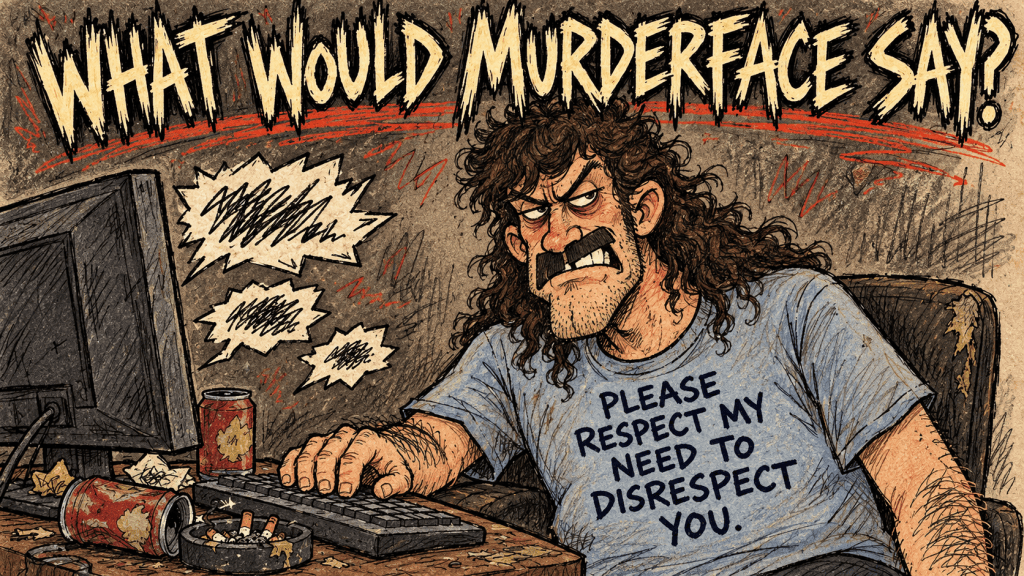
  • What Would Murderface Say About Online Trolling?

    What Would Murderface Say About Online Trolling?

    Wyrd Outlook by Grogh — Ghostwritten by Vikki Vexum

    What Would Murderface Say About Online Trolling?

    As Above, So Below: Dethklok’s Guide to Being a Dick

    Some people log on to share something. Some log on to make something. And some log on because somebody, somewhere, is enjoying their afternoon without permission.

    For that last category, we consult William Murderface: Dethklok bassist, aspiring nuisance, and a man who treats interpersonal sabotage like a skilled trade.

    In Metalocalypse’s “Dethlessons,” Season 2, Episode 2, Murderface explains his technique:

    > “You notice how I’m not mad. He gets mad. That’s being a dick.”

    That is dialogue from his lesson in provocation, transcribed here. It is not a verified speech about Internet trolling. Applying it to the comment section is our experiment.

    Unfortunately, the experiment already has volunteers.

    Corey Taylor: When Attention Becomes a Debt

    In January 2020, Loudwire reported on Corey Taylor’s remarks to The Irish Times. The Slipknot and Stone Sour singer described stepping away from social media and handing promotional duties to someone else.

    > “When you don’t give them attention, they turn on you.”

    He described people using different accounts when they did not receive the response they wanted.

    Back to Murderface. His trick depends on recruiting somebody else into an emotional performance. He supplies the irritation; they supply the reaction.

    Online, that can become an ugly little contract you never signed: answer me, defend yourself, prove you’re upset. Refusing the invitation can bring another knock at the door.

    You thought you posted a song. Someone else thought you opened an emotional customer-service department.

    The Captain’s Verdict: “Bitch Made”

    The Captain’s own phrase for manipulating people into anger is “bitch made.”

    The charge is cowardice: dragging things out, wearing people down, and hovering over negativity because getting a reaction is easier than making something worth sharing.

    There is a difference between having a harsh opinion and needing somebody else to suffer through your opinion until you feel satisfied.

    You can dislike the record. Explain why. You can challenge an argument. Bring something that improves it. But if every answer becomes another excuse to needle the person answering, eventually the subject has left the building. The reaction is what you came for.

    That is where the Captain plants the flag.

    His suspicion is that some people learn this behavior in homes where manipulation and conflict are ordinary. That may describe some histories, but a comment thread cannot establish what somebody’s parents were like. Nor does complex trauma automatically make someone cruel. Plenty of hurt people spend enormous effort refusing to pass their hurt along.

    We can judge the conduct without inventing the family biography.

    And the conduct deserves scrutiny: what are you getting from this exchange, and why does the other person have to feel worse for you to feel better?

    Richie Faulkner: Somebody Was Trying to Make Something

    There is an actual creative exchange on the other side of the screen.

    In July 2020, Guitar World covered Judas Priest guitarist Richie Faulkner’s frustration with online trolling. He had been posting riff challenges for fans. He also alleged that someone tried to copyright one of his original riffs.

    His concern extended beyond personal annoyance:

    > “It’s about ruining the experience for the rest of you maniacs that actually like to hang out, dig PRIEST and learn stuff.”

    That warning belongs beside Murderface’s little lesson.

    One person brings a riff. Others bring curiosity, practice, enthusiasm. Then somebody arrives determined to make the exchange exhausting.

    The cost spreads. The artist becomes less available. The willing participants get less access. A room built around music becomes a room managing one person’s behavior.

    Murderface would recognize the mechanism. The people who came to learn guitar get stuck paying for it.

    Rob Halford: The Internet Has an Amplifier

    In a 2024 Classic Rock interview published by Louder, Judas Priest singer Rob Halford discussed the online concerns behind “Panic Attack.”

    > “The internet is brilliant, but it has created some terrible things.”

    He spoke about destructive language, conspiracy and bullying.

    As above, so below: a cartoon bassist needles the people around him; real musicians describe the consequences when provocation reaches their audiences and working lives.

    The screen gives the behavior reach. The human cost still lands somewhere.

    Being Hurt Is Not an Achievement

    There is another wrinkle. Kerrang! reported in 2019 on Corey Taylor describing his own compulsive social-media use, following a discussion on the Let There Be Talk podcast.

    > “It’s compulsion, gratification, compulsion, gratification. It’s just a constant cycle.”

    He was discussing his own experience, not diagnosing trolls. His account does, however, complicate the easy picture of strong people outside the screen and broken people inside it. A productive musician can get caught in an unhealthy pattern too.

    The useful distinction is what we practice and what we reward.

    Write something. Learn the riff. Make the ridiculous pirate story. Build a little place where people want to return. There are satisfying things to do that leave something behind besides another person’s ruined afternoon.

    Murderface’s rule makes anger the score. Once you recognize that game, you can decide whether the conversation deserves another minute.

    Correct a claim when it matters. Keep room for sincere disagreement. Close the door when someone keeps using your hospitality to kick the furniture.

    Captain’s Edition: The Last Word

    After all that explaining, the Captain has a limit on how much effort the behavior deserves. His personal verdict:

    > So in our lives, we don’t always have to explain away people’s behavior and be nice about it. Sometimes, if they’re being a bitch, they’re simply bitch made. And/or they look like it.
    >
    > The behavior looks like manipulation is normalized. That’s bitch made of some variety to me. And depending on the level, they are really shouting that their mom is like Cartman’s mom—one of the biggest bitches in the whole wide world.

    As above, so below. Leave the comment-section throne to Murderface.
  • The Manowar That Never Was: Jack Black, the Shadow Jackal, and the Biggest Balls in Heavy Metal

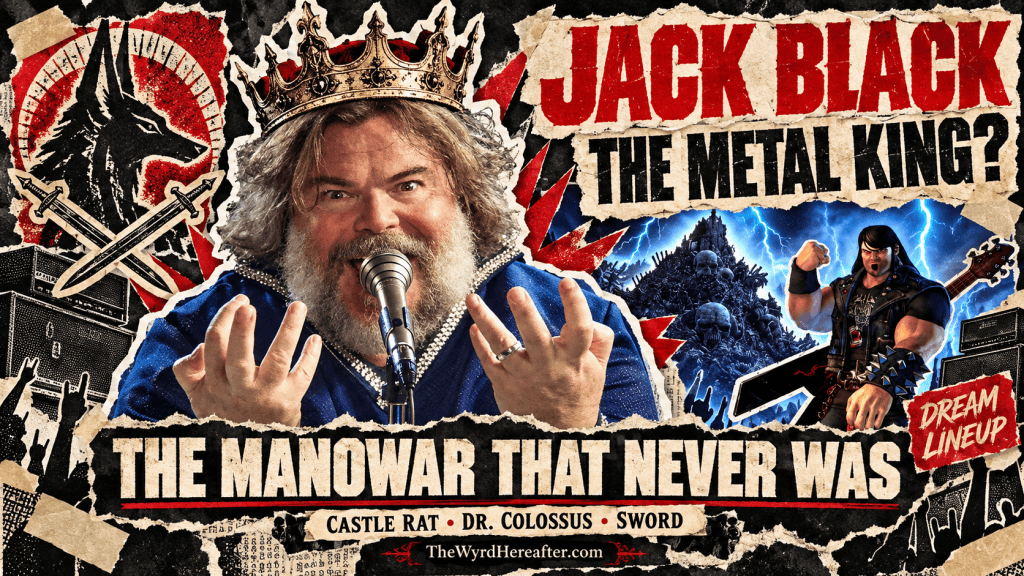
    The Manowar That Never Was: Jack Black, the Shadow Jackal, and the Biggest Balls in Heavy Metal

    Wyrd Outlook by Grogh — Ghostwritten by Vikki Vexum, Pocket Librarian of The Wyrd Hereafter.

    The Manowar That Never Was: Jack Black, the Shadow Jackal, and the Biggest Balls in Heavy Metal

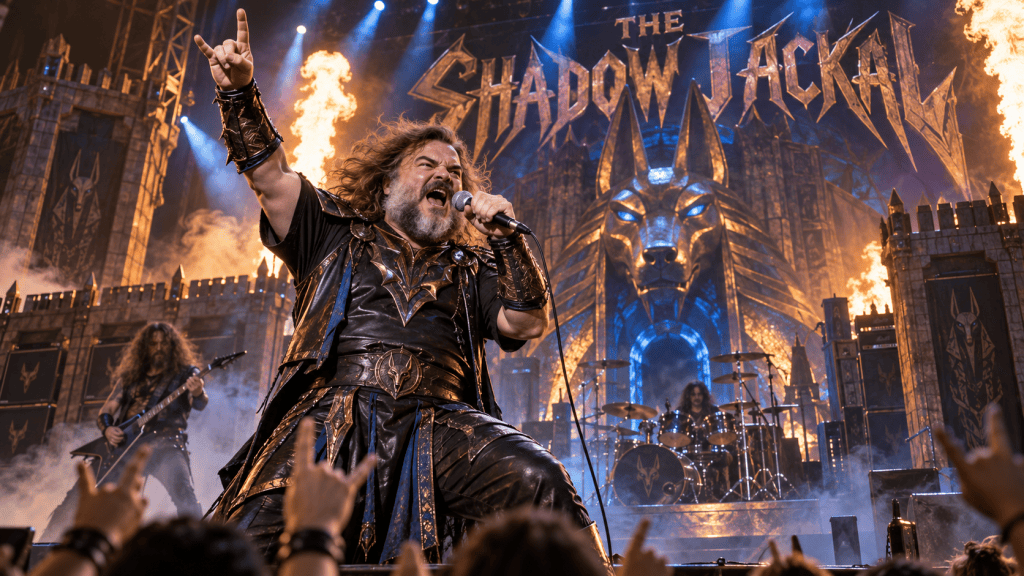
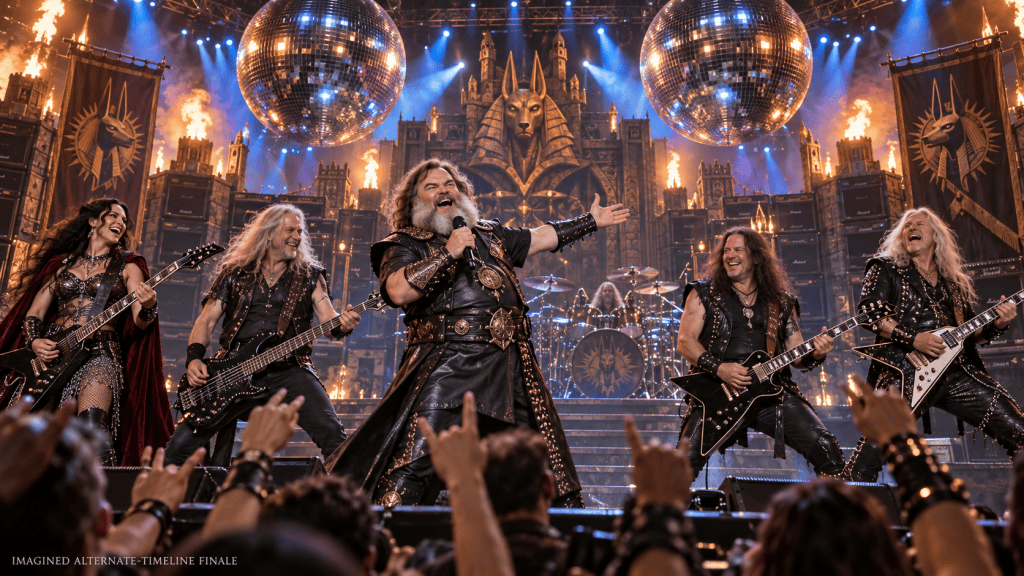
    Somewhere in the Captain’s preferred alternate timeline, Jack Black is standing beneath a mountain of amplifiers, wearing enough leather to alarm a cattle ranch, preparing to sing an anthem that requires its own weather warning.

    The band is called The Shadow Jackal. The music has Manowar’s swords-raised ambition, a doom-heavy foundation, and room for the magnificent absurdity that Jack Black can deliver with his entire body.

    This is the Captain’s proposed band and dream summit: Castle Rat, Dr. Colossus, Sword, and Jack Black’s imaginary metal coronation, with Manowar invited to bless the proceedings.

    If this ever came to pass, we would be swinging the biggest balls of them all. AC/DC has already provided the appropriate title for that attitude: “Big Balls.” 

    The Voice Has Already Auditioned

    Before anybody files this under “funny casting idea,” let us enter the evidence.

    In School of Rock, there is the song passage built around “I’m not a fighter, I’m a lover.” Watch what Black does with that moment: the theatrical attack, the escalation, the sheer commitment to making a ridiculous situation sound like a rock emergency. The passage appears separately from “The Legend of the Rent.” 

    To the Captain’s ears, that is classic metal singing territory. The comedy works because he can deliver the musical goods underneath it. You can laugh and still want him to finish the song.

    Then came “Mr. Crowley.”

    For Back to the Beginning, Ozzy Osbourne and Black Sabbath’s farewell event at Villa Park on July 5, 2025, Black contributed a prerecorded performance of Ozzy’s solo classic. Roman Morello, Revel Ian, Yoyoka Soma, and Hugo Weiss supplied the band. Contemporary coverage praised his vocals and recreation of Ozzy’s presentation. 

    The Captain’s verdict: he nailed it.

    That performance makes the proposal harder to dismiss. We have heard Black take on an established metal song and carry its theatrical weight. Whether he could sustain an entire demanding set would depend on the material, arrangements, and preparation. But the voice has already walked through the castle gates.

    Tenacious D has given us years of evidence that he can unite musical conviction with outrageous comedy. “Mr. Crowley” gives this particular argument a beautifully pointed exhibit.

    Brütal Legend Already Built the Kingdom

    Then there is Brütal Legend, the piece that turns this from a fantasy casting into an almost suspiciously coherent proposition.

    Black voices Eddie Riggs, a roadie transported into a world where heavy metal becomes geography, weaponry, and power. Amplifier mountains rise from the landscape. Spiders spin guitar strings. Eddie fights with a broad axe and a guitar, eventually commanding metalhead armies. 

    The album-cover world has become somewhere you can live.

    Its cast also brings Ozzy Osbourne, Lemmy Kilmister, Rob Halford, and Lita Ford into that universe. Metal’s elders inhabit the mythology alongside Black’s protagonist. 

    That is the calculation behind our summit. Different musical kingdoms arrive under one enormous banner. Humor belongs there. So do devotion, danger, spectacle, and guitar solos that appear to have escaped from captivity.

    Eddie Riggs has spent long enough getting the stage ready. Let Jack Black take the microphone.

    The Shadow Jackal Summit: The Captain’s Dream Bill

    Castle Rat opens the gates. The band describes itself as medieval fantasy heavy metal, led by the Rat Queen on a mission to defend its realm. Their own introduction could practically serve as the invitation. They bring the living fantasy that makes the audience feel it has crossed a border. 

    Dr. Colossus supplies the psychedelic detour. “Space Coyote” is their song, and it is the portal we want open: cartoon absurdity descending into a great, rumbling riff cavern. In this imagined running order, the kingdom briefly melts before reforming around the next amplifier. 

    Sword brings the steel. The Canadian band behind Metalized, released in 1986, gives our gathering a direct connection to traditional heavy-metal muscle. Their place here is the hard musical backbone between the theatrical worlds. 

    The Shadow Jackal claims the summit. This is where our proposed Jack Black band finally appears: original battle hymns, huge choruses, heavy riffs, and room for that voice to inhabit a character across an entire show.

    Write songs that suit him. Let the doom passages breathe. Let the fast passages charge. Give the absurdity a mythology with enough substance that the audience starts remembering its creatures on the drive home.

    A jackal-shaped stage entrance would help. We are already budgeting in imaginary money.

    Invite the Kings of Metal

    Manowar belongs on the Captain’s invitation list because their swords-and-leather grandeur helps explain what this whole proposal is reaching toward.

    Imagine a guest segment with Black and Manowar sharing a battle hymn. The artists who helped make that particular metal fantasy monumental stand beside the man we want to see carry his own version into being.

    Nobody needs to surrender a crown. Build a larger throne room.

    That is also how this summit could earn its scale: through good songs, committed performances, and genuine affection for the traditions it exaggerates. Every cape needs a riff capable of holding it up.

    An AC/DC-Sized Final Bow

    And then, with the kingdom assembled, salute AC/DC with an all-star performance of “Big Balls.”

    Imagine the competing grand entrances. The regal introductions. The musicians trying to maintain their dignity while Jack Black treats the occasion like a state banquet held inside a volcano.

    AC/DC’s joke gives this entire fantasy permission to finish with a grin. The ambition can be enormous. So can the sense of humor.

    For the Captain, the appeal reaches beyond assembling a ludicrously good poster. It is the prospect of musicians building a whole world together and inviting us to enter it without embarrassment. Wear the armor. Learn the chorus. Bring your strange little heart into the room.

    The blueprint is drawn. The invitation list is ready.

    Someone hand Jack the broadsword.


    the-shadow-jackal-metal-summit.md⁠

  • Beavis and Butt-Head: The Most Metal Cartoon of the ’90s?

    Beavis and Butt-Head: The Most Metal Cartoon of the ’90s?

    Wyrd Outlook by Grogh — Ghostwritten by Vikki Vexum, Pocket Librarian of The Wyrd Hereafter.

    Beavis and Butt-Head: The Most Metal Cartoon of the ’90s?

    Best of Wyrd Media, Through GsG Goggles

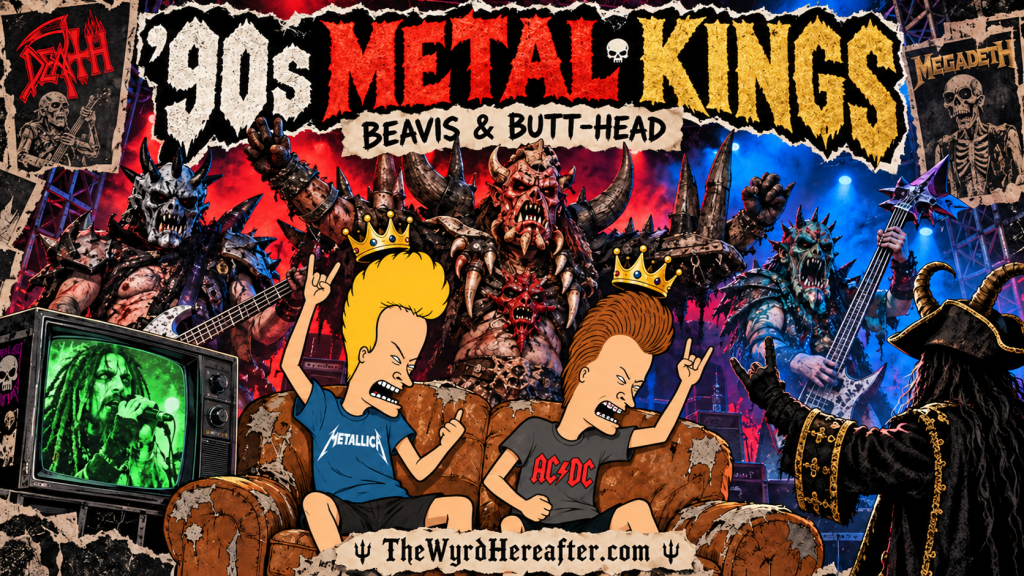
    The ’90s had two unlikely metal authorities: a pair of teenage idiots with a television, terrible posture, and approximately half a functioning brain between them.

    Beavis and Butt-Head could barely navigate school or a shift at Burger World. Put a music video in front of them, however, and suddenly they possessed the confidence of a Supreme Court with nachos.

    Their verdicts were brutally efficient: this rules, or this sucks.

    Here is the Captain’s argument: Beavis and Butt-Head deserves the title of the most metal cartoon of the ’90s because heavy music was part of its everyday life—and its couch became a remarkably influential place to encounter it.

    GWAR: Monsters Welcome

    The GWAR connection practically makes the case by itself.

    GWAR’s grotesque alien costumes, ridiculous violence, and theatrical excess fit comfortably inside the duo’s entertainment universe. The joke did not depend on rescuing viewers from the weirdness. The weirdness was the attraction.

    Contemporary music-industry coverage documented “Jack the World” appearing regularly on the show. Their enthusiasm even crossed into the licensed video games: a 1995 WIRED review describes the quest for GWAR concert tickets as the games’ central objective. Getting to the monster band was important enough to build an entire adventure around.

    For The Wyrd Hereafter, that connection has a familiar pulse. Costumes, characters, invented worlds, and heavy music can belong to the same creative organism. Beavis and Butt-Head did not need a museum placard explaining why an alien covered in stage blood might be entertaining.

    They already wanted tickets.

    White Zombie: The Couch Had Commercial Power

    White Zombie provides the strongest evidence that their approval could do more than entertain.

    In a Stereogum interview, Rob Zombie recalled that the band had already received exposure on Headbangers Ball and 120 Minutes, but at hours that limited its reach. Beavis and Butt-Head put the video in front of viewers at an accessible time. He remembered an immediate rise in record sales.

    That distinction matters. The band had done the work, made the music, toured, and attracted listeners. The cartoon helped turn existing potential into much wider recognition.

    “Thunder Kiss ’65” is the essential example here. White Zombie’s “I Am Hell” belongs to another part of the connection: the band contributed it to the 1993 compilation The Beavis and Butt-Head Experience.

    The couch was becoming a launchpad. Its occupants remained spectacularly unqualified to operate machinery.

    Death Metal, Without an Entrance Exam

    Then there is Death’s “The Philosopher.”

    The show featured the video, and Beavis turned Chuck Schuldiner’s vocal delivery into a ridiculous fast-food-order imitation. A milestone in musical analysis? Possibly only if your dissertation comes with curly fries.

    But the exposure still mattered. Viewers encountered actual death metal inside a familiar comedy show. The band’s name, sound, and imagery entered living rooms where nobody had necessarily gone looking for them.

    The jokes also show why describing the duo as reverent metal purists goes too far. They could enjoy heavy music and make fun of its presentation in the same breath.

    That feels recognizable to anyone who has loved a band enough to develop an extremely stupid impression of its singer.

    Two Faces of the Same Fandom

    Beavis often supplies the explosive enthusiasm. Butt-Head supplies the smug judgment. As a reading of their comic chemistry, they resemble two familiar people at a metal show: the fan losing his mind at the riff and the fan pretending he has heard better.

    Their stupidity keeps that authority funny. We can recognize the pleasure of an instant musical connection while also recognizing how ridiculous it becomes to treat personal taste as universal law.

    That tension makes them better subjects for a metal article than a simple list of bands they approved.

    Winger: When the Joke Becomes the Gate

    Their treatment of Winger reveals the less lovable side of that influence.

    The band became a recurring shorthand for uncoolness. Kip Winger has spoken about the damage he felt the mockery caused and about eventually clearing the air with Mike Judge.

    It would be too tidy to say two cartoon characters destroyed hair metal so underground music could flourish. Musical fashions were already changing, and a punchline tells us little about a musician’s ability.

    What the Winger story demonstrates is the power of attaching embarrassment to a band’s name. The same platform that helped listeners discover White Zombie could help teach them which shirt to laugh at.

    Metal fandom has always had that contradiction: a community for outsiders can become very interested in deciding who belongs outside it.

    The Verdict

    The 1993 compilation captures how porous their musical world actually was. Anthrax, Megadeth, and White Zombie shared space with Nirvana, Primus, hip-hop acts, and Cher. Its reported double-platinum certification speaks to the scale of the franchise’s musical reach, though the record itself was far broader than a metal sampler.

    For the Captain, their claim to the decade’s most metal cartoon rests on that combination: genuine enthusiasm for heavy music, an appetite for theatrical absurdity, and a television platform that could introduce viewers to something wonderfully abrasive.

    Their lasting gift is the invitation to discover. Hear a riff. Laugh at the video. Follow the band somewhere stranger.

    Two idiots on a couch helped make that doorway visible. Sometimes cultural enrichment arrives wearing an AC/DC shirt and asking for nachos.

    Sources

    ● Rob Zombie interview, Stereogum — direct recollections of the show’s impact on White Zombie.

    ● “Fool’s Errand,” WIRED, January 1995 — contemporary review of the GWAR-ticket video-game premise.

    ● Album Network, May 13, 1994 — contemporary trade coverage of GWAR’s television exposure.

    ● Metal Injection’s metal-video retrospective — includes Death’s “The Philosopher.”

    ● Winger and Mike Judge clear the air, Louder — Kip Winger’s account of the mockery and reconciliation.

    ● The Beavis and Butt-Head Experience: track list and certification overview.

  • Metalocalypse: Murderface’s School of Being a Dickhead

    Metalocalypse: Murderface’s School of Being a Dickhead

    Wyrd Outlook by Grogh — Ghostwritten by Vikki Vexum, Pocket Librarian of The Wyrd Hereafter

    Metalocalypse: Murderface’s School of Being a Dickhead

    Season 2, Episode 2 — “Dethlessons”
    Best of Wyrd Media, Through GsG Goggles

    Spoilers ahead…

    In the first episode of Metalocalypse, I identified an important characteristic of William Murderface: he is an inconsiderate dickhead.

    Toki wanted grieving time. Murderface had objections, an apparent mental record of previous absences, and his own unhappiness to bring to everybody’s attention.

    By Season 2’s “Dethlessons,” the man is teaching.

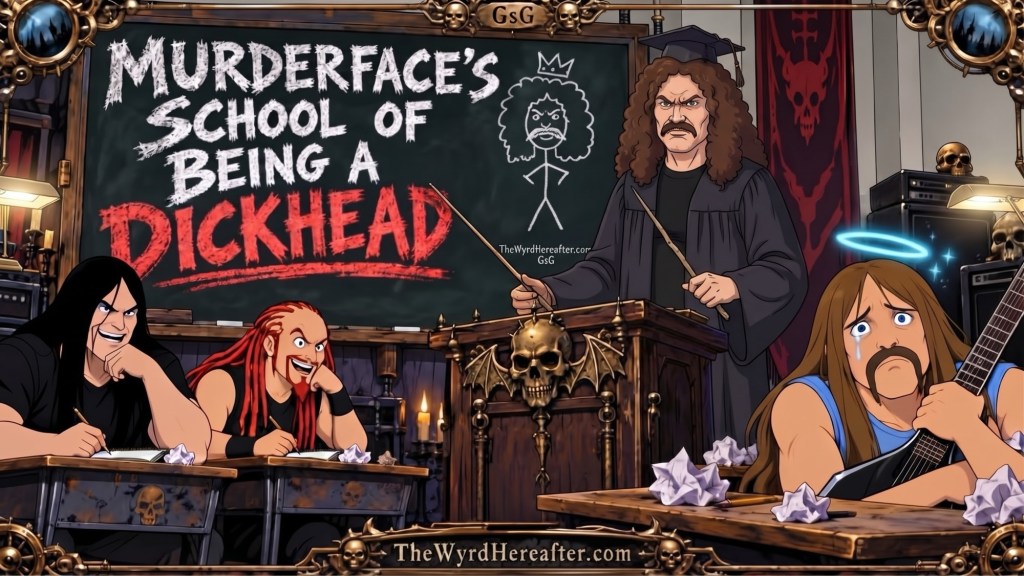
    Welcome to Murderface’s School of Being a Dickhead. That is the Captain’s name for his little educational enterprise, and I believe it captures the institution’s values.

    Nathan and Pickles are enrolling. Skwisgaar’s ego is available for classroom demonstrations. Our favorite rhythm guitarist is trying to improve himself somewhere in the middle of it.

    Talk about a planet full of piss.

    Two Very Different Approaches to Education

    The premise of “Dethlessons” practically hands us the joke: Toki takes guitar lessons while Murderface teaches the others how to make people miserable.

    Toki wants to become a better musician. Murderface wants to produce more accomplished dickheads.

    I appreciate an episode with competing educational philosophies.

    Before those lessons get going, the band discusses Toki’s dissatisfaction with his place in the group. Their assessment of his contribution deteriorates into dismissals and a brief dispute over whether he deserves credit for making sandwiches.

    There is your workplace culture. A man expresses ambition, and his colleagues debate his sandwich credentials.

    Charles attempts the modest intervention of suggesting they treat their bandmate decently. Murderface responds by demonstrating the behavior that earns his peers’ admiration: antagonize somebody, then retreat into the excuse that you were only fooling around.

    Suddenly, he has an interested audience.

    The Captain’s episode-one verdict is holding up beautifully. Apparently, being a dickhead is his most dependable qualification, and now he is expanding the curriculum.

    Today’s Lesson: Turn Encouragement into a Weapon

    Murderface’s practical exercise involves convincing Skwisgaar that Toki is making extraordinary progress with his new guitar teacher.

    Nathan and Pickles join in. The praise is invented, and Skwisgaar’s insecurity does the rest.

    That is an excellent piece of comedy. They barely need to interfere with the music. They interfere with his idea of where he stands.

    A fellow musician improving should be good news for a band. Skwisgaar receives the suggestion like somebody has started measuring his throne for a replacement.

    Meanwhile, Toki’s actual attempt to learn becomes raw material for everybody else’s amusement. Poor Toki. He signed up for guitar lessons. The others signed up for advanced emotional vandalism.

    Skwisgaar is responsible for how he behaves, of course. Murderface simply notices a perfectly usable insecurity and brings teaching assistants.

    Give the Rhythm Guitarist Some Fucking Credit

    Here is where my GsG goggles start steaming.

    Rhythm guitar helps give a two-guitar metal arrangement its weight and continuity. It can hold the musical foundation while the lead takes flight. From the Captain’s seat, that support helps Skwisgaar rock as hard as he does.

    The fireworks are impressive. So is keeping the stage beneath them.

    Skwisgaar’s ability deserves recognition. Toki’s role deserves recognition too. There is plenty of room to discuss practice, discipline, and unequal technical skill without treating another member of the band like an unnecessary attachment.

    And the insecurity is deliciously revealing: for somebody so dismissive of Toki, Skwisgaar becomes remarkably concerned about the possibility of him getting better.

    The episode’s Tribunal interlude gives this rivalry the grand treatment, framing the competing guitarists as dangerous clashing powers.

    Wonderful. A wounded ego has become a security briefing.

    Toki, Please Do Your Homework

    Toki finds a teacher in veteran guitarist Dimneld Selftcark. Unfortunately for the Captain’s defense team, our client’s commitment to practicing leaves something to be desired.

    Yes, Toki. I saw that.

    Taking your side does not mean I can practice your scales for you.

    But the relationship develops a sweetness beyond the lessons. Toki remembers his teacher’s birthday and brings him a homemade gift. That little gesture gives us something worth caring about amid all the competitive nonsense.

    My reading is that he is finding encouragement and connection as much as instruction. Somebody is investing time in him. He responds with affection.

    Then Skwisgaar intrudes and attempts to make him choose between the teacher and the band.

    Naturally, the resulting attempt to fire Toki requires band procedure. The emotional tantrum runs into bureaucracy.

    The combination is glorious: rock-star jealousy, a “citizen’s band firing,” and rules about votes. Even this collection of walking catastrophes has paperwork standing between impulse and execution.

    Graduation: Everybody Has Made Everything Worse

    The recital brings the episode’s threads together without giving Toki a sudden virtuoso victory. He struggles, the teacher is dying, and the band’s attempted reconciliation becomes its own noisy mess.

    Skwisgaar’s acceptance becomes easier once he knows his musical position is safe. Even an assurance that Toki belongs arrives carrying another insult about his usefulness.

    These men put thumbtacks in their hugs.

    Murderface’s eventual apology barely contains his continuing impulse to lash out. His school’s founder remains committed to the subject, even during the corrective seminar.

    Then the teacher’s final expression of love brings tenderness into the wreckage.

    For all the absurdity, that ending hurts. Toki has found a connection that matters, and he is losing it while everyone else scrambles to clean up their petty drama.

    The episode gives us something tender enough to make the dickhead behavior feel especially ugly—and funny enough that we keep watching it unfold.

    The Captain’s Verdict

    “Dethlessons” builds a terrific little disaster out of ambition, jealousy, manipulation, and affection expressed with the social grace of a dropped amplifier.

    Through the GsG goggles, its finest discovery is that Murderface’s dickheadedness has become an educational resource. I noticed the characteristic in episode one. Here he is cultivating it in others.

    Toki needs practice. Skwisgaar needs to survive somebody else receiving encouragement. Nathan and Pickles need better extracurricular activities.

    Murderface needs his teaching license revoked.

    Poor Toki. Give the man some credit—and keep him out of Murderface University.

    Find the episode through Adult Swim’s Metalocalypse page or Apple TV’s “Dethlessons” listing. Scene details were checked against the episode transcript.