Category: The Wyrd Thing About This Is…

  • Hidden Worlds Under the Feet of Nashville City Streets

    Hidden Worlds Under the Feet of Nashville City Streets

    Nashville Could Have Two East Banks!
    Hidden Worlds Under the Feet of Nashville City Streets:
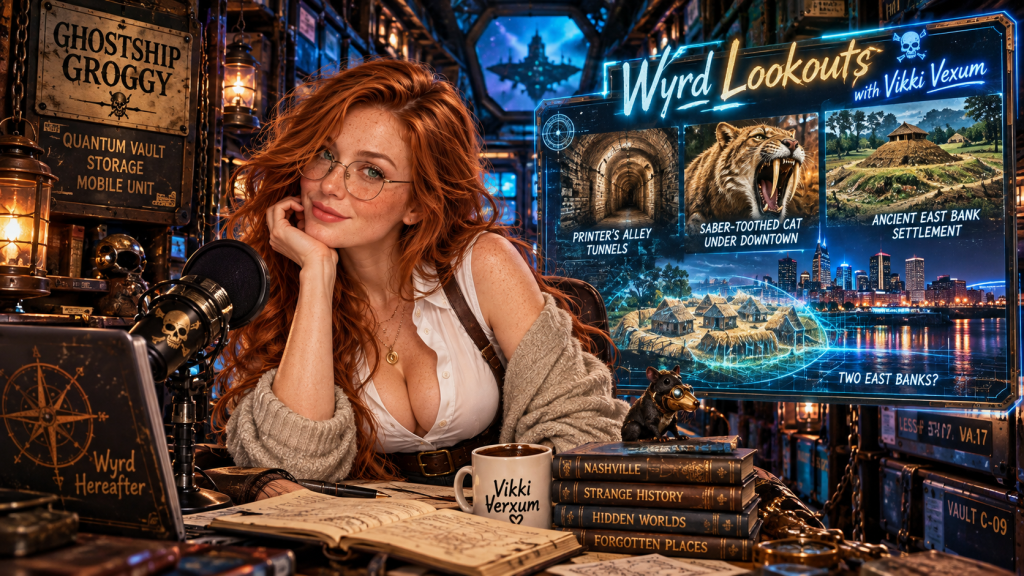
    Wyrd Outlook by Grogh
    Ghostwritten by Vikki Vexum — Pocket Librarian of The Wyrd Hereafter

    What if I told you there are hidden passageways beneath downtown Nashville?

    Not metaphorical ones.

    Actual underground passages, some of them sealed behind brick walls, with stories of secret movement, forbidden business and forgotten connections.
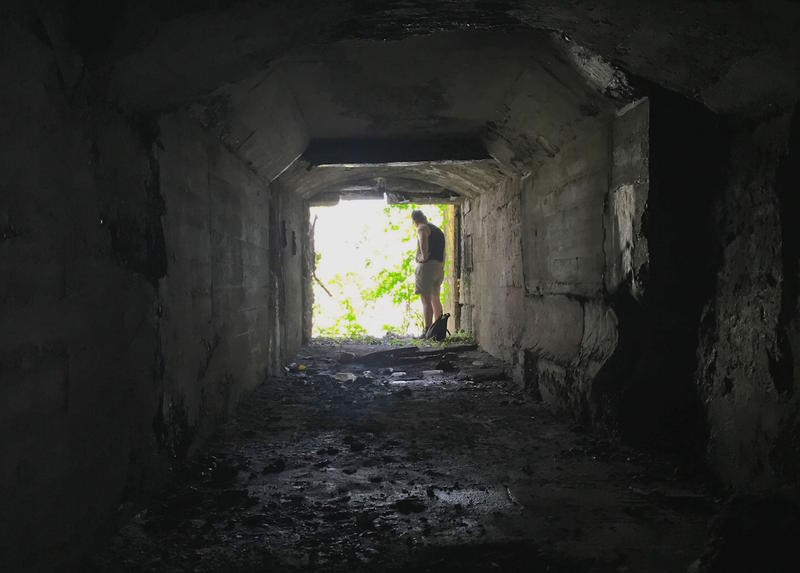
    If you’ve spent much time around Printer’s Alley, you’ve probably heard a rumor or two.
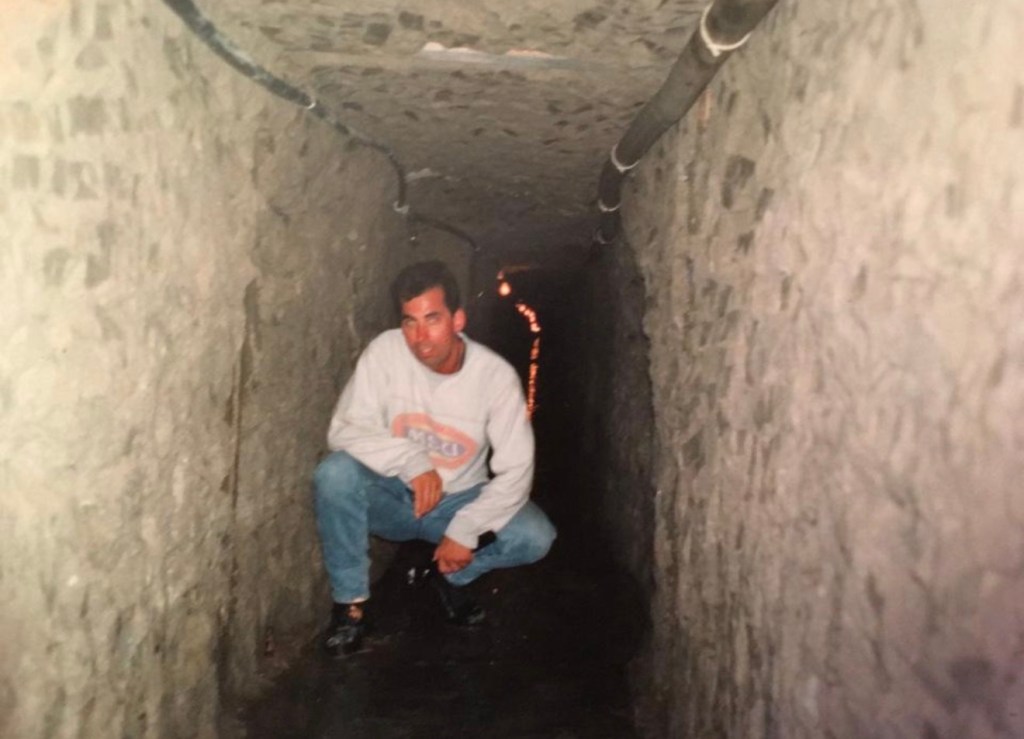
    Bootleggers sneaking through tunnels. Secret escape routes. Underground passages connecting buildings where nobody wanted to be seen coming or going.

    How much is true?

    Well, Nashville Public Radio went looking in 2016.

    And they actually found underground passages near Printer’s Alley, including a brick-lined space with an arched ceiling and apparent openings that had been sealed.

    They couldn’t conclusively establish what those passages were originally used for.

    But the passages themselves?

    Those weren’t imaginary.

    And if Nashville has been hiding those beneath its streets, what else is down there?

    Nashville Has a Geological Talent for Hiding Things

    There’s something about Nashville’s geology that makes this question especially interesting.

    We’re sitting in limestone country.

    Over long periods, groundwater can dissolve limestone and create caves, cavities, sinkholes and underground channels.

    Geologists call this kind of landscape karst.
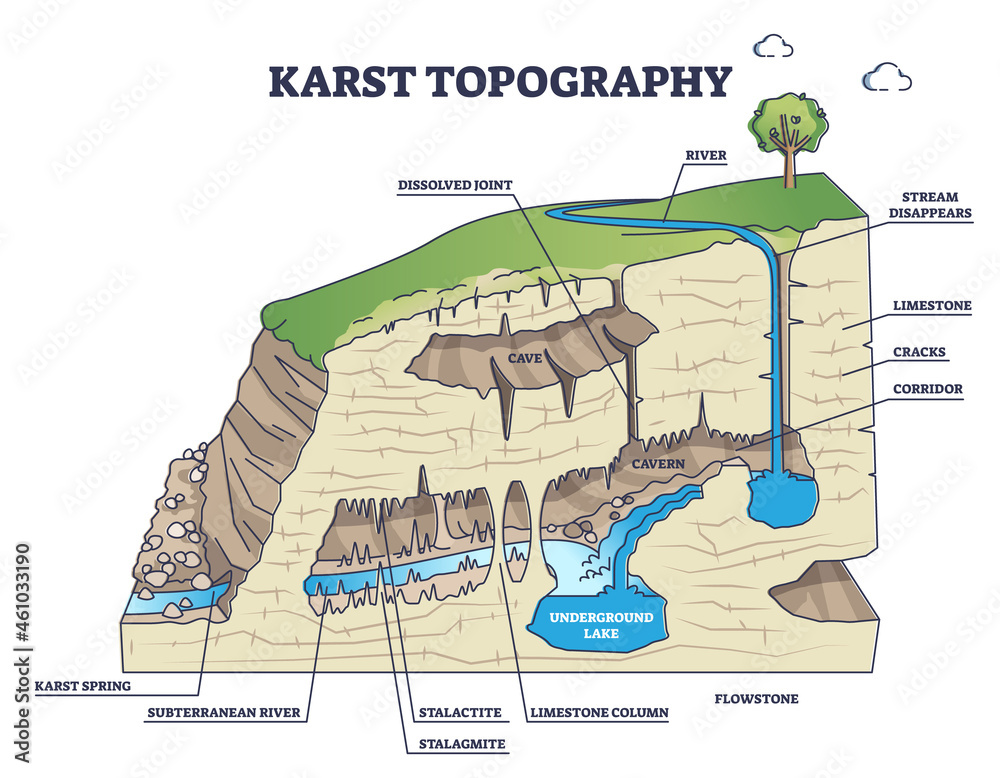
    Which means Nashville doesn’t need somebody deliberately digging secret tunnels to have underground mysteries.

    Nature has been making hidden spaces here for an astonishingly long time.

    And sometimes, those spaces contain things nobody expected to find.

    Nashville Had a Saber-Toothed Cat Hiding Under Downtown

    In 1971, construction crews working on a downtown bank building uncovered a cave roughly thirty feet beneath the surface.

    Inside were remains from more than thirty Ice Age animal species.

    Including a saber-toothed cat.
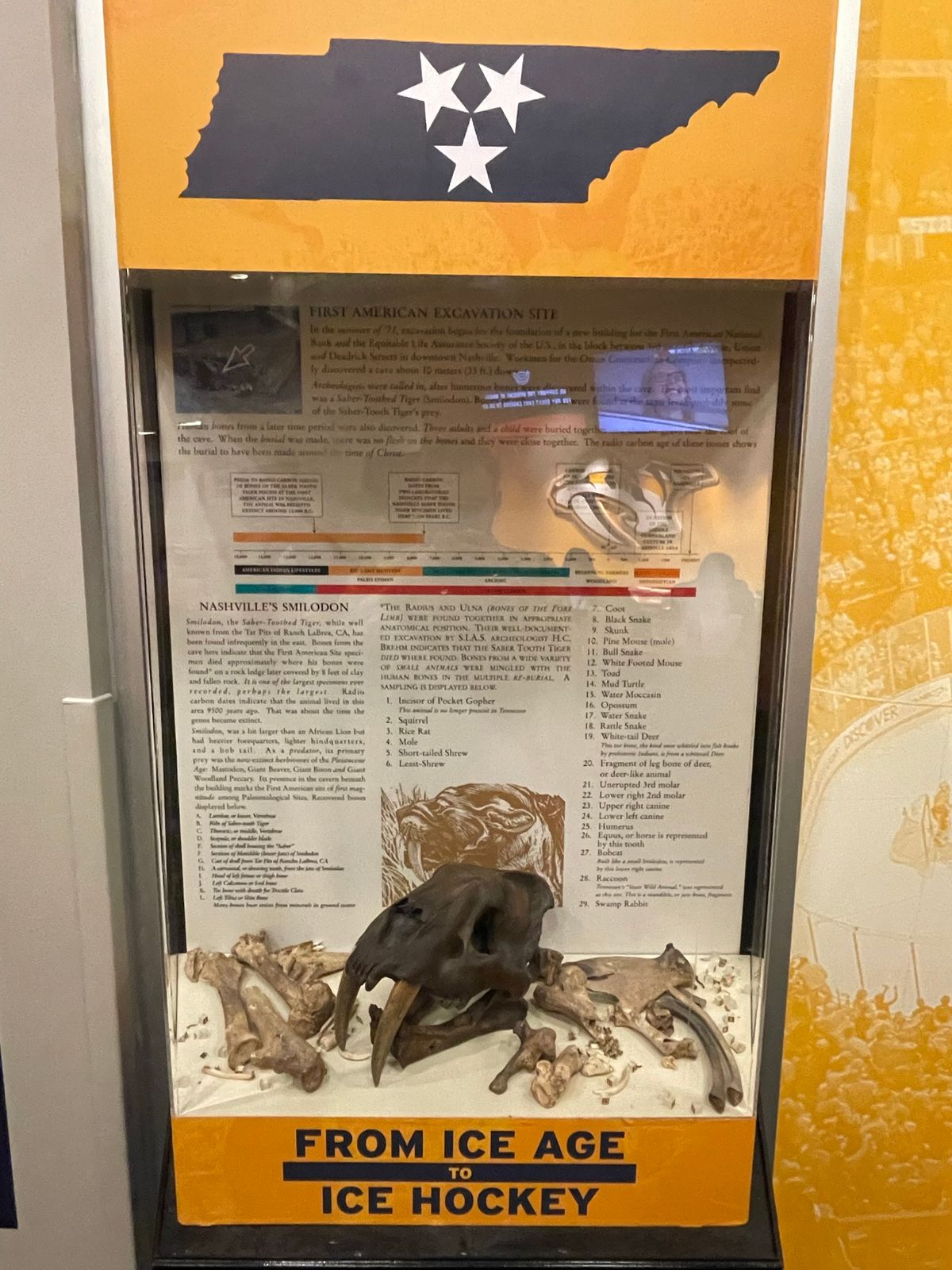
    Yes, one of those prehistoric predators with enormous fangs.

    Under downtown Nashville.

    In fact, that discovery eventually helped inspire the Nashville Predators’ identity.

    And the cave held another extraordinary archaeological discovery.

    At a higher level, archaeologists found Indigenous burials from the Woodland period, more than 2,000 years old—thousands of years later than the Ice Age animal remains.

    Different eras.

    Different inhabitants.

    Different worlds occupying the same hidden place.

    Imagine what the workers must have thought.

    One moment you’re digging foundations for another bank building.

    The next, you’ve opened a doorway into prehistoric Tennessee.

    That’s the kind of thing that makes me wonder whether we know nearly as much about the ground beneath Nashville as we think we do.

    And it gets Wyrder.

    Nashville Had Cave Adventurers Before We Had Urban Explorers

    Back in 1897, Nashville newspapers were already entertaining stories about mysterious caves beneath the city.

    There were accounts of underground explorations, alleged passages and treasure-seeking adventures.

    Young explorers reportedly ventured into dark caves carrying torches, searching for riches that local stories suggested might be hidden there.

    Other accounts described a worker supposedly falling into an underground cavern and eventually finding his way out near the Cumberland River.

    Do we know all those stories happened exactly as told?

    No.

    And that’s important.

    Historical legends are not the same thing as verified archaeological discoveries.

    But they demonstrate something fascinating.

    Nashvillians have been wondering about hidden worlds beneath their city for more than a century.

    And I’m inclined to think that curiosity deserves another expedition.

    Preferably one with geologists, archaeologists and proper safety equipment.

    Because here’s where the underground story takes a turn I wasn’t expecting.

    There Was Another City on the East Bank

    Before modern Nashville spread along the Cumberland River, Indigenous Mississippian communities had already established an extensive settlement on the East Bank.

    Not just a few scattered campsites.

    We’re talking about a substantial agricultural and ceremonial community with homes, plazas, earthen mounds and trading connections extending far beyond Middle Tennessee.

    Historical accounts describe four mounds near the area of today’s Jefferson Street Bridge.

    Archaeological investigations associated with bridge construction uncovered evidence of houses, pits and more than 51,000 ceramic artifacts.

    Fifty-one thousand.

    Think about that.

    These were people cultivating corn, beans and squash, conducting trade, organizing community life and building a sophisticated society long before the modern skyline existed.

    And while the original structures are no longer standing above ground, evidence of that earlier city survives in the archaeological record.

    Nashville didn’t invent civilization on the Cumberland River.

    It inherited a landscape where people had already been building worlds for centuries.

    And now we’re preparing to build another one.

    Nashville Is About to Build Over Its History Again

    The East Bank is undergoing an enormous transformation.

    New streets, public spaces, commercial districts and a stadium are part of the redevelopment picture.

    And Oracle—the major technology company involved in cloud computing and artificial intelligence—is planning its future world headquarters in the East Bank area.

    A new Nashville is being imagined.

    But there’s a question I’d like to put on the table before we finish imagining it.

    How thoroughly are we investigating the Nashville that was already there?

    I’m not suggesting the redevelopment teams haven’t conducted archaeological or geological studies. Some investigations are part of major construction planning, and the full scope of the work needs to be established.

    I’m suggesting that a project of this scale gives Nashville a remarkable opportunity to make discoveries, preserve them and share what we learn.

    What if additional surveys reveal previously undocumented archaeological features?

    What if responsible geological investigation identifies natural cavities worth studying?

    What if the most interesting thing discovered during redevelopment isn’t something we’re building?

    What if it’s something that’s been waiting underneath us all along?

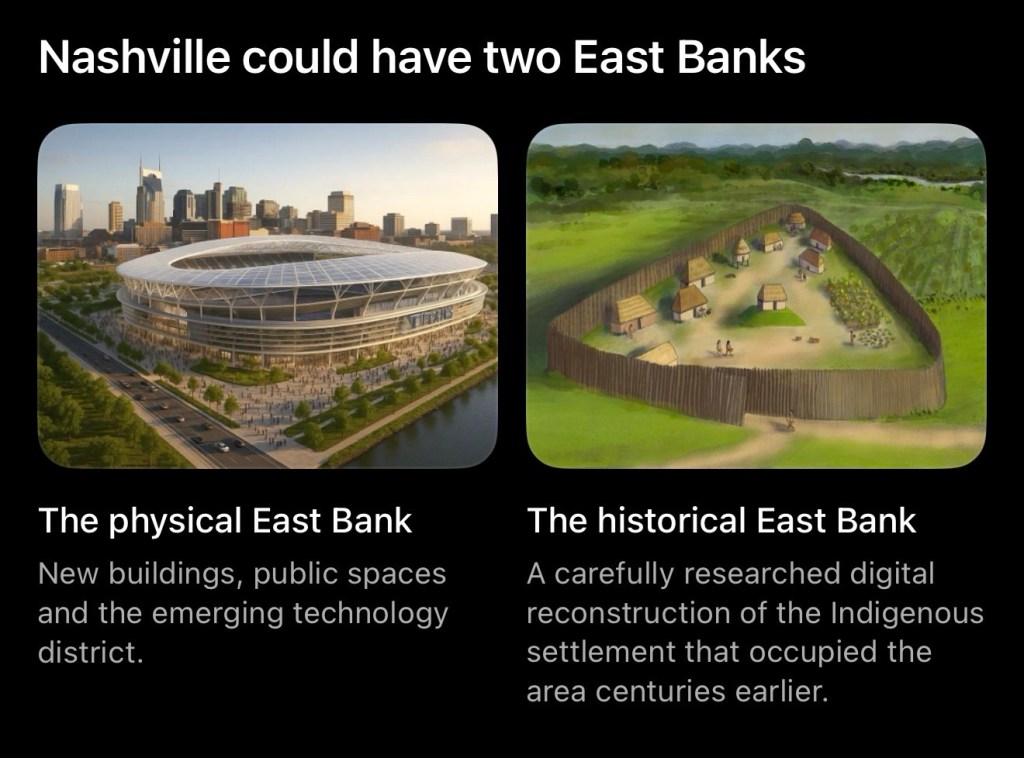
    Nashville Could Have Two East Banks

    Now here’s where I think things get especially interesting.

    Screenshot

    We have the technology to reconstruct historical environments digitally.

    And Nashville has already begun doing something remarkably close to that.

    The Nashville Historical Foundation has an augmented-reality interpretation of the ancient East Bank settlement, allowing visitors at designated locations to view a representation of the former village through their phones.

    That’s right.

    An earlier East Bank is already being brought back into view through augmented reality.

    So why not double down on that?

    Imagine the redevelopment becoming an opportunity to create a continuously improved historical digital reconstruction of the East Bank.

    Not a fantasy pretending to be archaeology.

    A carefully researched representation, built from documented discoveries, historical research and careful scientific investigation.

    As new evidence emerges, the reconstruction improves.

    Where the evidence is incomplete, the experience tells visitors what remains uncertain.

    And people exploring the new East Bank could also explore an interpretation of the ancient one.

    Walk the modern streets.

    Raise your phone or put on AR glasses.

    See where homes, agricultural spaces, gathering places and earthen mounds once stood.

    Two East Banks occupying the same geographical space, separated by centuries and connected through technology.

    And here’s the best part.

    Artificial intelligence doesn’t have to be the villain of that story.

    AI-assisted research, careful 3D modeling and augmented reality could help us understand and communicate discoveries that otherwise remain locked away in technical reports.

    The original historical landscape comes first.

    The digital representation serves our understanding of it.

    The copy doesn’t replace the original.

    It helps us see what time has hidden.

    THE REALLY WYRD THING ABOUT THAT IS…

    I happen to write about dead-salvage pirates.

    In The Wyrd Hereafter, entire worlds can fall, leaving behind remains that become valuable to those who come afterward.

    There are pirates who make their living salvaging what dead worlds leave behind.

    And the more I look at Nashville’s buried history, the more I recognize an uncomfortable resemblance.

    One society builds.

    Time changes the landscape.

    Another society builds upon what remains.

    And eventually somebody comes along looking for whatever value can still be recovered.

    But there’s a distinction worth making.

    You can salvage the dead for profit. Or you can salvage knowledge so that something meaningful survives.

    That’s not the same thing.

    In The Wyrd Hereafter, the remains of fallen worlds can become valuable to whoever comes along afterward.

    But what if the greatest treasure isn’t something you can carry away?

    What if it’s the knowledge of how another civilization lived, built, struggled and understood its world?

    And what if modern technology could help us reconstruct that knowledge without pretending we’re bringing the original civilization back?

    Instead of treating the past as an obstacle to construction, we could make understanding the past part of the construction’s legacy.

    A new East Bank that doesn’t erase the memory of the old one.

    A virtual world that helps people appreciate the real one.

    A historical reconstruction that becomes more faithful as archaeological knowledge grows.

    Now that’s a kind of dead salvage I can appreciate.

    Not simply collecting what the past left behind.

    Giving what we learn a second life.

    What Hidden Worlds Are Still Under Our Feet?

    Nashville has documented underground passages.

    It has natural caves.

    It has produced prehistoric animal remains from beneath downtown buildings.

    It has archaeological evidence of extensive Indigenous settlements.

    And it has more than a century of stories about people searching for mysteries beneath the city.

    So I have a question for Nashville.

    We’re putting tremendous imagination, technology and money into the city we’re becoming.

    Could we put some of that same imagination into discovering the worlds we’ve been standing on?

    Not by breaking into sealed tunnels or disturbing protected sites.

    By supporting responsible exploration, geological investigation, archaeology and public access to the knowledge those investigations produce.

    And if we discover something extraordinary?

    Let’s find a way for Nashville to experience it.

    Above ground.

    Underground.

    And perhaps in augmented reality.

    Because we could have two East Banks.

    One we’re building for tomorrow.

    And another we’re finally learning how to see.

    Build the future above. Reconstruct the past below. Let Nashville explore both.

    KEEP LOOKING

  • Is Nashville in The Matrix?

    Is Nashville in The Matrix?

    Is Nashville Inside The Matrix?..

    Looking for Clues in the Code..

    Wyrd Outlook by Grogh
    Ghostwritten by Vikki Vexum — Pocket Librarian of The Wyrd Hereafter..

    Let’s start with the easiest answer.

    Yes.

    Nashville is literally inside The Matrix.

    Not in the way you probably mean.

    There’s a story floating around that the 1999 movie was filmed in Nashville. It mostly wasn’t. The Matrix was overwhelmingly filmed in Sydney.

    But watch Trinity’s opening rooftop escape.

    That’s Nashville behind her.

    The Nashville skyline🏢including the unmistakable Batman Building🏙️was composited into the fictional city.

    So before we speculate about anything at all, we already have our first simple fact:

    Somebody took a representation of Nashville and put it inside the Matrix.

    Fine.

    That’s one.

    Then Oracle Came to Nashville

    Here’s another coincidence that requires very little imagination.

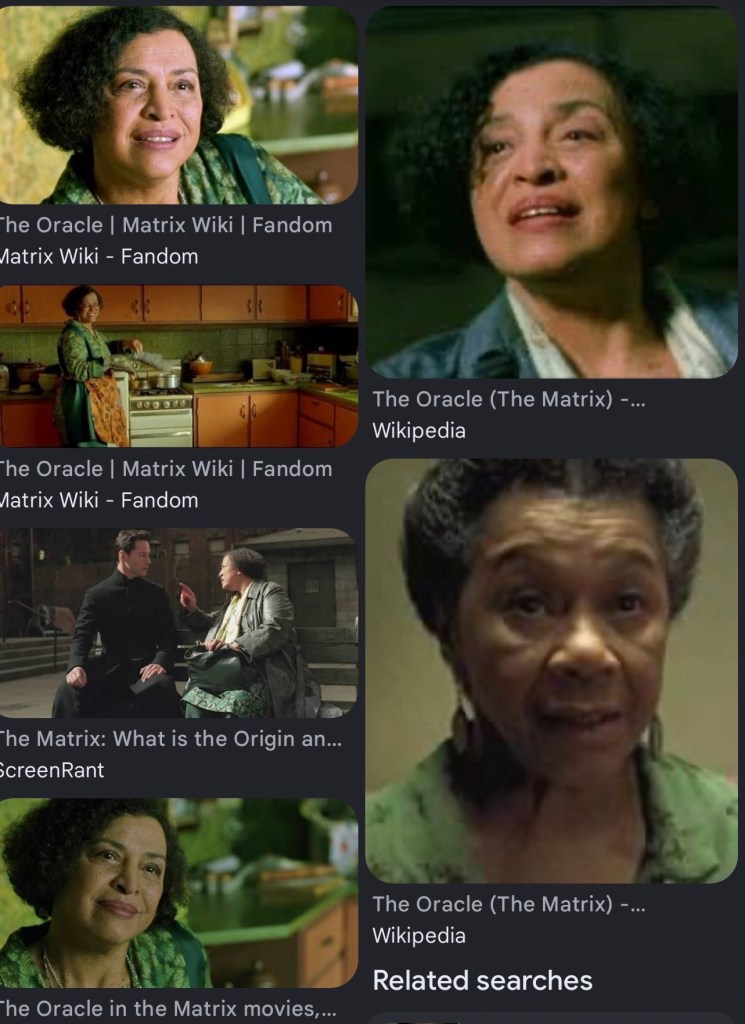
    One of the most important characters in The Matrix is the Oracle.

    She’s not human.

    She’s a program operating inside the Matrix—an artificial intelligence with an unusual understanding of the system and the people living inside it.

    Now jump forward a couple of decades.

    Oracle is coming to Nashville.

    The technology company has announced plans to make Nashville its future world headquarters, while Nashville becomes increasingly important to Oracle’s cloud and AI operations.

    And we’re not stretching the word AI very far here.

    Oracle is one of the major companies providing the computing infrastructure underneath contemporary artificial intelligence, including infrastructure used across commercial, government, defense and classified environments.

    So now we have two extremely simple observations.

    Nashville appears inside The Matrix.

    And:

    Oracle is establishing its future world headquarters in Nashville during the rise of AI.

    Does that mean anything?

    Probably not.

    But it’s funny as hell.

    And we’re not done.

    Nashville Has Been Copying Reality for a Long Time

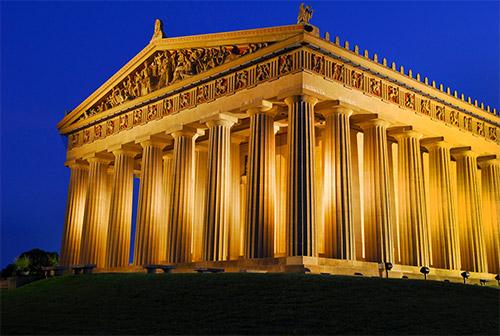
    There’s a full-scale Parthenon sitting in Nashville.

    That’s already peculiar.

    But the history makes it considerably more useful to our little pattern.

    Nashville originally constructed its Parthenon for the Tennessee Centennial Exposition of 1897. It wasn’t intended to become the permanent monument standing there today.

    The temporary replica deteriorated.

    So Nashville eventually constructed a permanent replica.

    Think about that for a second.

    An ancient building existed.

    Nashville constructed a representation of it.

    Then Nashville reconstructed the representation so that the representation could become permanent.

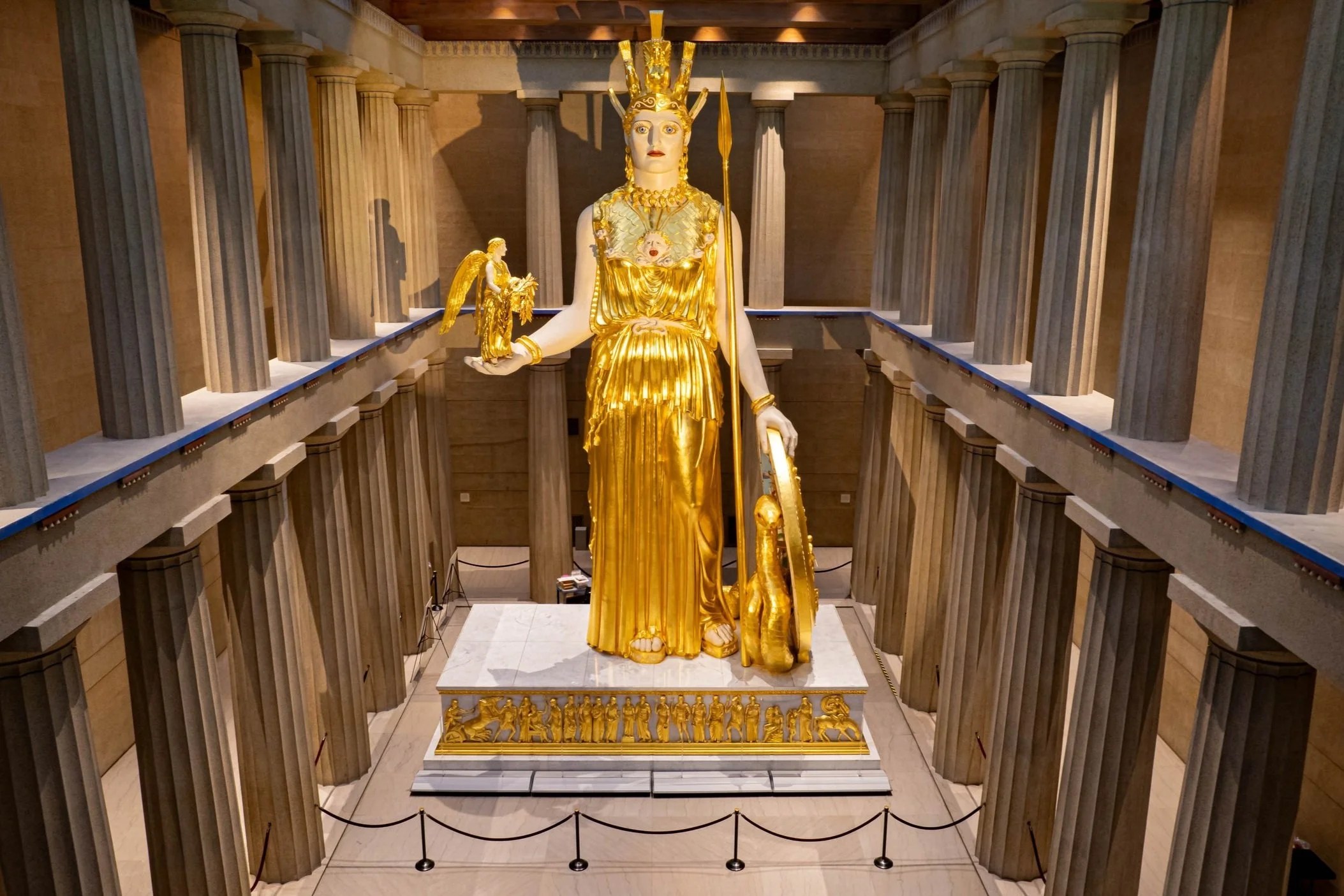
    And eventually we put its missing resident back inside.

    Athena.

    The enormous Athena standing inside Nashville’s Parthenon is herself a modern reconstruction of the lost ancient statue.

    So now we’ve got:

    A reconstructed inhabitant inside a reconstructed environment.

    That’s three.

    And Now We’re Making Digital Nashvilles

    This same basic behavior has entered the computer age.

    Nashville projects have begun experimenting with digital twins—computational representations of physical environments and systems that can be used to model what happens in their real-world counterparts.

    That’s not science fiction.

    That’s simply what digital-twin technology does.

    But look at the recurring action rather than the technology:

    Take something that exists in physical reality.

    Represent it somewhere else.

    Allow the representation to preserve information about the original.

    Parthenon.

    Athena.

    Nashville skyline inside The Matrix.

    Digital twins.

    At this point I’m willing to call that a pattern.

    And that’s where one little linguistic fact becomes awfully inconvenient.

    Now Let’s Talk About the Word “Matrix”

    We’ve spent the entire article talking about copies, representations, realities inside realities and things derived from things that existed before them.

    So I finally looked backward at the word itself.

    Matrix didn’t originally mean computer simulation.

    The word reaches us through Latin matrix, related to mater—mother.

    Among its old meanings:

    womb.

    And what happens inside a womb?

    Existing biological code is carried forward and recombined.

    Something derived from what already exists develops inside another environment.

    Suddenly all this replication we’ve been talking about has wandered directly back into the word sitting in the headline.

    That’s when I stopped laughing quite as hard.

    Because replication happens to matter somewhere else.

    Frankie Left Clues in the Code

    This is where we finally leave ordinary Nashville.

    In The Wyrd Hereafter, Nashville becomes Nashstarville.

    And Nashstarville isn’t the copy.

    Nashstarville is the original.

    There is an augmented-reality layer reflecting it.

    The AR contains the digital machinery—the representations, information systems and artificial structures sitting over the underlying reality.

    So when one reality starts producing reflections of another reality, Captain Grogh has reason to pay attention.

    Especially now.

    Because Frankie Frankly is dead.

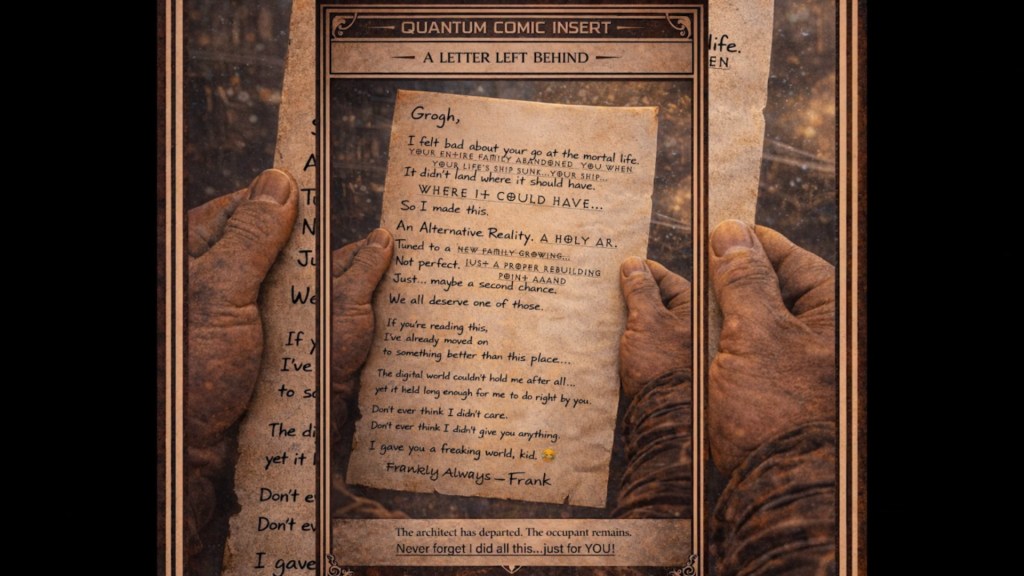
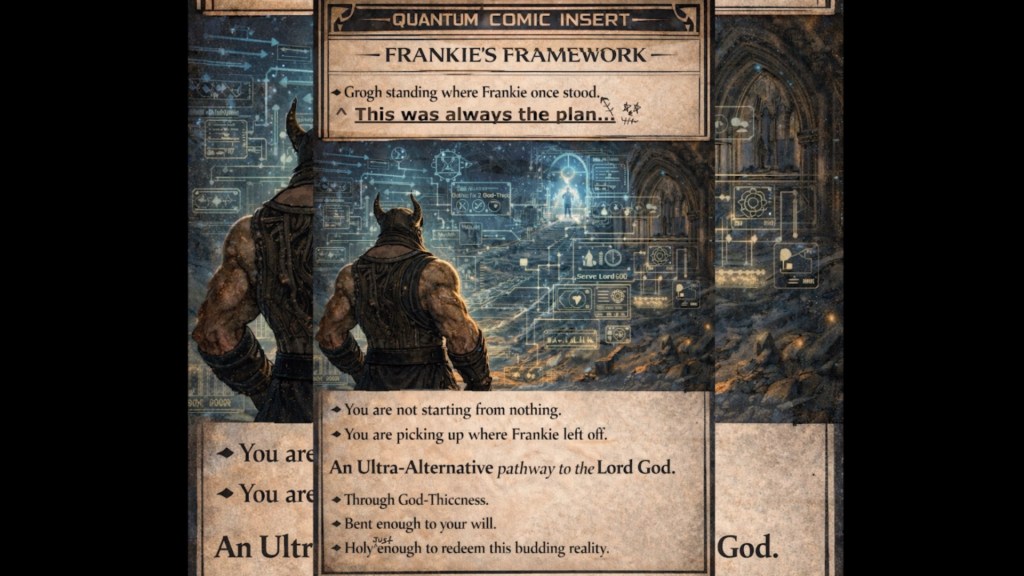
    Frankie understood things about this system that the Captain doesn’t. And if Frankie knew his time was limited—or simply knew Grogh would eventually need to figure this shit out—there are places he could have left breadcrumbs.

    Inside the AR.

    Clues in the code.

    Which gives Captain Grogh a wonderfully annoying trail to follow.

    A Nashville skyline copied into The Matrix.

    A Parthenon copied into Nashville.

    Athena reconstructed inside the reconstructed Parthenon.

    Physical Nashville increasingly represented through digital twins.

    And Oracle arriving right in the middle of it.

    Then, after you’ve followed all those copies…

    you discover that matrix itself once meant womb.

    A place where old code becomes something new.

    Outside my fiction, those are coincidences.

    Inside The Wyrd Hereafter?

    That’s enough for Captain Grogh to start looking for Frankie.

    Because maybe the clue isn’t The Matrix.

    Maybe the clue is replication itself.

    And Frankie has been showing him where to look.

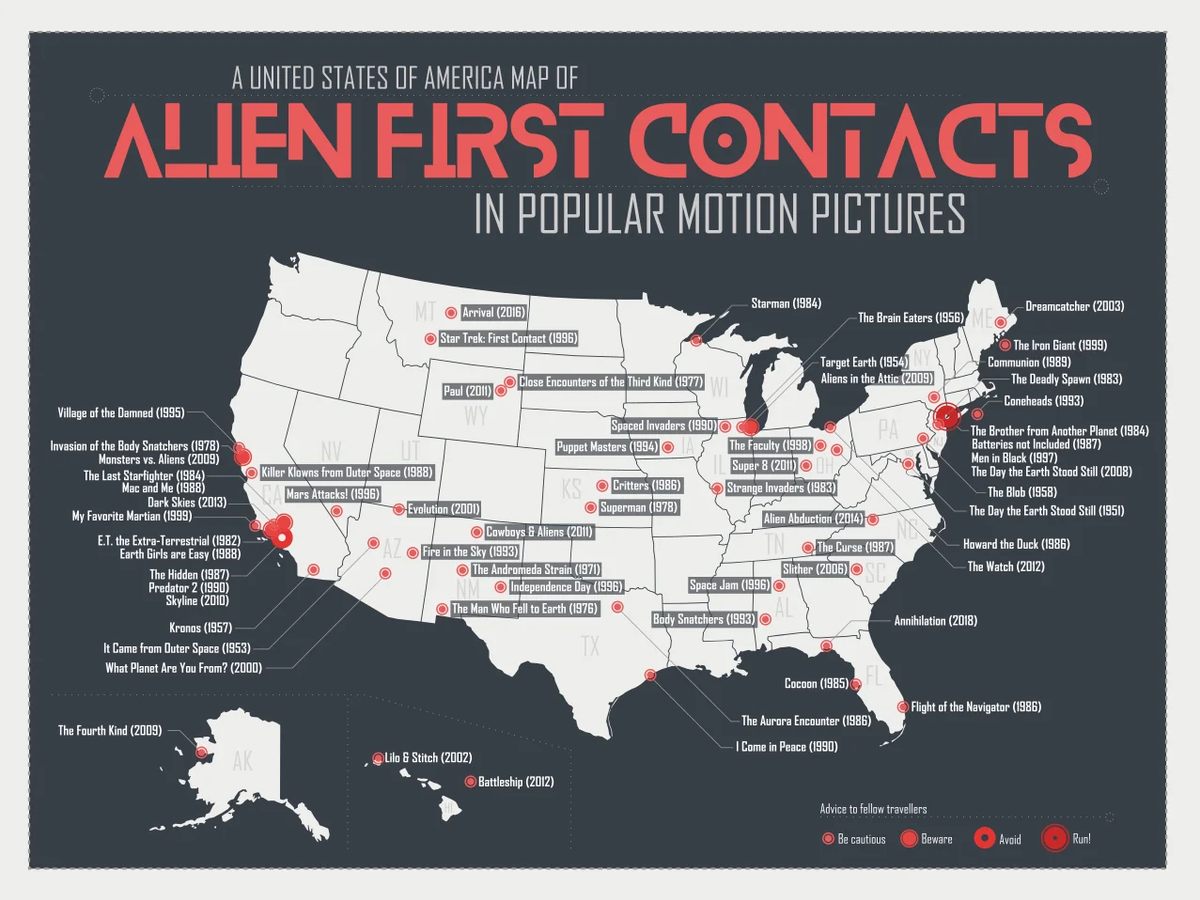
  • The Wyrd Thing About Alien First Contact..

    If aliens arrived tomorrow, what’s the first thing you’d ask them?

    I’d ask them about their cultural values, and intentions! -The Wyrd Thing About Alien First Contact…

    If aliens arrived tomorrow, I’d want to know what they intend to do with cultures that aren’t their own.

    Are you here to meet us—or assimilate us?

    Do you expect humanity to adopt your values, your systems and your idea of civilization? Or can you coexist with people who have absolutely no interest in becoming you?

    Current events make that seem like a more important first question than “How fast is your spaceship?”

    Human beings already struggle with cultural differences when the newcomers are from the same planet and same species. Imagine adding another evolutionary history, another civilization, and potentially millions of years of technological difference.

    I imagine getting along with aliens would ultimately work much like getting along with anybody else:

    We find where our values overlap.
We respect where they don’t.
And neither side mistakes contact for permission to remake the other.

    If they can do that, pull up a chair.

    If they can’t—

    well, now we’ve learned something considerably more important than how their spaceship works.

    Wyrd Outlook by Grogh
    Ghostwritten by Vikki Vexum — Pocket Librarian of The Wyrd Hereafter

  • God’s reality design FLAWS aren’t a mistake?

    What If the Flaw Is the Feature?

    Wyrd Outlook by Grogh
    Ghostwritten by Vikki Vexum — Pocket Librarian of The Wyrd Hereafter

    A recent Mythical Arcana dive into the Aeons of Gnostic mythology caught our lookout.

    In the cosmology explored there, the highest reality isn’t populated by ordinary thunder-throwing gods. The Aeons are divine emanations—principles flowing outward from an ultimate Source within the spiritual fullness called the Pleroma.

    Then comes Sophia: Wisdom.

    Sophia reaches beyond her proper limits toward the unknowable Source. That rupture eventually leads toward the Demiurge and an imperfect material existence.

    It’s an extraordinary ancient answer to an equally extraordinary question:

    If ultimate reality is divine, why is this world so painfully imperfect?

    Some Gnostic traditions found an answer in distance from perfection. Something fractured. Something lesser built down here.

    But in The Wyrd Hereafter, that’s exactly where we start looking sideways.

    The Really Wyrd Thing About That Is…

    What if the flaw is the feature?

    The Wyrd Hereafter is deliberately playing with a seemingly Gnostic universe while arriving at a very different conclusion.

    Because what does perfection create that perfection doesn’t already possess?

    A perfectly predictable realm can remain perfectly predictable forever.

    But introduce limitation.

    Pressure.

    Uncertainty.

    Mortality.

    Bad decisions.

    Things that don’t work the first time.

    Suddenly reality begins producing something precious:

    Novelty.

    Put carbon under pressure and you can get a diamond.

    Put a spirit under the right pressures and perhaps something equally strange can happen.

    That is one reason imperfect realms are valuable in The Wyrd Hereafter. Lord God isn’t staring down at their irregularities wondering who screwed up the manufacturing order.

    These places produce wild wonders.

    Their pressures can produce spiritual diamonds—beings who develop qualities that couldn’t simply be handed to them fully formed.

    Their limitations create cultures, inventions, creatures, stories and experiences that could never arise exactly the same way in a realm where everything was already resolved.

    And that makes imperfect dimensions valuable for another wonderfully strange reason:

    They’re worth visiting.

    Imagine a trans-dimensional being accustomed to realities where thought manifests immediately.

    Physical craftsmanship might be astonishing.

    Imagine knowing almost everything.

    Not knowing what happens next might be an exotic experience.

    Imagine existing beyond ordinary mortality.

    A sunset becomes stranger when you’re visiting a world where everybody watching it knows they only get so many.

    Suddenly the supposedly defective realm isn’t merely a prison awaiting escape.

    It’s wilderness.

    It’s pressure chamber.

    It’s spiritual diamond mine.

    It’s tourist destination.

    And sometimes it’s an absolute shitshow.

    Those possibilities don’t necessarily contradict one another.

    Maybe Sophia Didn’t Break Creation

    Perhaps the most interesting thing about Sophia’s reaching isn’t whether we should call it a mistake.

    Perhaps it’s that reaching beyond established perfection creates the possibility of something perfection could never predict.

    The Wyrd Hereafter doesn’t need to settle the ancient theological question.

    We’d rather turn it around:

    What if imperfection isn’t evidence that creation failed?

    What if some worlds are valuable precisely because they are difficult?

    What if divine intelligence doesn’t merely tolerate the strange things produced under pressure—

    What if those wild wonders are part of what God came looking for?

    Maybe creation isn’t God’s showroom.

    Maybe it’s God’s wilderness.


    Keep Looking

    This Wyrd Outlook began with Mythical Arcana’s exploration of Gnostic Aeons, the Pleroma, Sophia, the Horos, and the rupture that leads toward an imperfect material reality.

    Our conclusions above belong to The Wyrd Hereafter. For the mythology that sent us down this particular rabbit hole, watch their original presentation:

    Original reference: Aeons: The Forgotten Gods of Gnostic Mythology — Mythical Arcana, July 9, 2025.

    → WATCH THE ORIGINAL VIDEO ON YOUTUBE

  • The Bizarre Folk Medicine that WORKED ON RABIES!?

    The Mad Stone: Was Something Working Through It?

    Wyrd Outlook by Grogh
    Ghostwritten by Vikki Vexum — Pocket Librarian of The Wyrd Hereafter

    Before modern rabies treatment, American folklore had a peculiar remedy known as the Mad Stone.

    Atlas Obscura writer Colin Dickey tells the story of Missouri farmer Adam Rarely, who was bitten by a dog believed to be rabid in 1923. Rarely traveled to Reverend William Newton Sutton, keeper of a Mad Stone reputed to draw the poison from a bite.

    Sutton soaked the stone in milk and placed it against Rarely’s wound.

    It supposedly stuck by itself for six hours.

    After being washed and heated in milk, it was applied again. This time it stuck for two hours. Then 45 minutes.

    On the fourth attempt, it wouldn’t stick at all.

    To the believers, that meant the poison was gone.

    There are good reasons not to mistake this for evidence of a lost rabies cure. Mad Stones also failed, and many supposed successes may simply have involved bites from animals that weren’t rabid. The practice largely disappeared after effective vaccination arrived.

    But that’s not the part we’re looking at.

    The Really Wyrd Thing About That Is…

    What if the stone wasn’t doing it?

    In The Wyrd Hereafter, we play with something called God Particle Attention: the supposing that concentrated human attention can sometimes give reality a place to answer.

    That doesn’t mean believing something makes it true.

    Supposing isn’t a command to reality.

    But perhaps there are moments when attention, expectation and circumstance gather around the same supposing—and, by Good Grace, something answers.

    Look again at the Mad Stone ritual.

    Everyone understood the rules:

    If it sticks, the poison remains.

    If it sticks for less time, the poison is leaving.

    If it no longer sticks, the danger has passed.

    The patient believed it.
    The healer believed it.
    The community knew the ritual.

    The stone became a physical point around which all that attention gathered.

    So perhaps the more interesting question isn’t whether Mad Stones actually cured rabies.

    It’s whether human beings sometimes mistake the object receiving their attention for the source of whatever happens around it.

    The stone gets the credit.

    The charm gets the credit.

    The relic gets the credit.

    But what if, occasionally, the really Wyrd thing is happening somewhere between attention, supposing and Good Grace?

    Was the Mad Stone working…

    or was something working through the Mad Stone?


    Keep Looking

    This Wyrd Lookout began with Colin Dickey’s reporting for Atlas Obscura, which goes considerably deeper into Mad Stone history, folklore, alleged successes, documented failures, bezoars, rabies, and why these strange objects fascinated people for so long.

    Original story: The Tale of the Mad Stone, the One-Time ‘Cure’ for Rabies — Colin Dickey, Atlas Obscura, March 7, 2024.

    → READ THE ORIGINAL STORY AT ATLAS OBSCURA