Wyrd Outlook by Grogh — Ghostwritten by Vikki Vexum
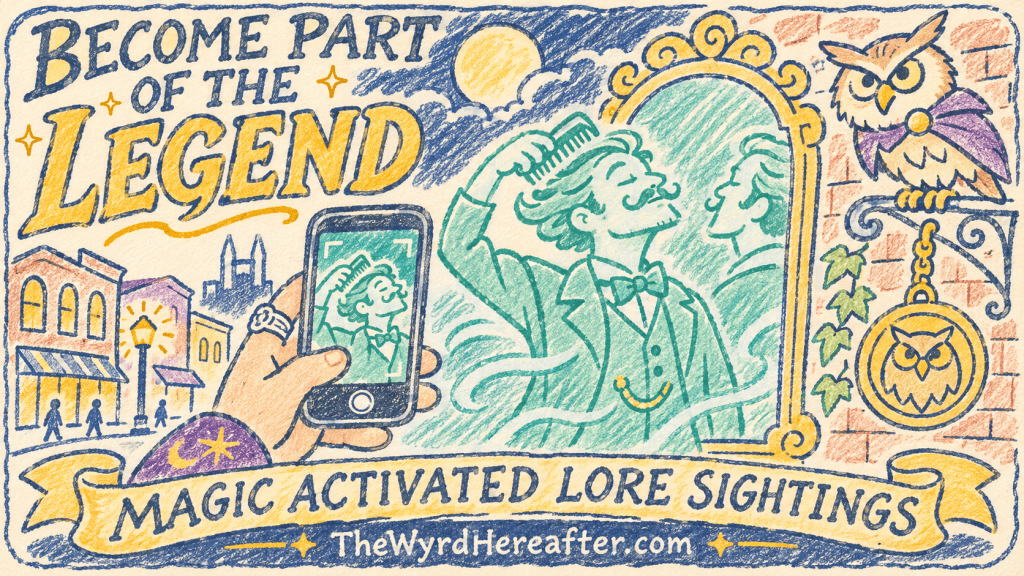
Magic Activated Lore Sightings: Find the Story. Become Part of the Legend.
You don’t have to wait for a ghost to introduce itself before you can become part of a local legend. Learn its story. Find a place where that story could unfold again. Bring back a scene so fitting that somebody else can see what you saw.
That is the invitation behind Magic Activated Lore Sightings, or Magic ALS: my reinvention of the ghost hunt, with folklore building at its heart.
The reward begins with having your contribution credited in a growing legend. There is also a Magic Owl token for accepted sightings. And along the way, you might discover some local history, see familiar surroundings differently, and recognize a human habit you would rather avoid carrying into eternity.
Arrr. That is a respectable haul for an afternoon’s haunting.
You are activating the lore
The name carries the wink. An Activated Lore Sighting openly helps a tale happen. You recognize a connection between a local legend and a fitting scene, then bring that connection to life through words, photography, illustration, or a combination.
Suppose a ghost’s established tale connects its downfall to vanity. You find an old mirror in a setting that suits the legend and imagine the apparition still combing its hair, endlessly preparing to be admired. The setting and behavior make sense together. Your contribution gives that story somewhere else to appear.
You have found the apparition metaphysically: you understand its pattern well enough to recognize another expression of it. The imaginative sighting is your way of sharing that recognition.
The same approach works for cryptids and other legendary spirits. Their defining pattern might be protection, hunger, mischief, territorial behavior, or an unresolved relationship with a place. A downfall is one powerful doorway into a story; other legends have different doors.
In the Captain’s Ghostship Groggy lore, fugitive spirits from my realm hide among familiar earthly legends. Their habits give them away. Learning the local tale helps you recognize where one of those fugitives might fit—and your contribution opens another chapter in the hunt.
Tall tales have carried history before
American folklore already offers a familiar relationship between a memorable tale and the history beneath it.

John Henry’s legend carries the world of railroad labor through ballads and work songs. The National Park Service credits those traditions with keeping the story of John Henry and Black railroad workers alive. The identity and precise circumstances behind the legendary contest remain subjects of research, but the tale keeps people asking about the workers who built the railroads.

Johnny Appleseed gives us another connection. Behind the folk character stood John Chapman, a real nurseryman who established apple nurseries and sold seedlings to settlers. His legendary identity continues to draw attention to that work, even as embellishment can obscure the fuller person.[2]
People can enjoy a tall tale’s exaggeration and still become curious about its historical roots. A memorable figure gives them someone to follow into a subject they might otherwise overlook.
That is an opportunity for our hunts. A new contribution can make somebody ask about an old building, a vanished occupation, or the people who once lived nearby. We can preserve the distinction between documented history, inherited folklore, and our new imaginative additions while letting all three enrich the experience.
Sometimes a tall tale is what keeps us looking long enough to discover the history.
Catch the pattern before it catches you
A haunting can also give a human predicament an unforgettable shape.

At Tennessee’s Capitol, a local ghost story identifies architect William Strickland and building commissioner Samuel Morgan as voices still arguing over the construction budget. Nashville Sites records that tradition as a haunting story.
Consider what that legend can express. Two figures associated with a monumental building become remembered, in this telling, for an argument they cannot leave behind. The moral reading is ours: needing the last word can become a prison of its own.
What argument would you hate to spend eternity having—and why are you still having it now?
That question is part of the hunt. Recognizing an apparition’s fixation may help us notice a smaller version in ourselves, our relationships, or the world around us. Vanity, resentment, jealousy, pride: a ghost story gives those patterns a face and somewhere to stand.
Other hauntings ask for compassion. Their patterns might concern grief, betrayal, injustice, or devotion that outlasts its purpose. Understanding a story never requires deciding that somebody deserved their death. We are looking for what the tale reveals about life.
Each hunt will close with its own “What Haunts You?” question, drawn from that particular legend. Catching the apparition means understanding something about it. Ideally, we come away understanding something about ourselves, too.
Your town gets a story. You get a part in it.
Local legends give people something to share about where they live. A thoughtful sighting can draw attention to overlooked details, encourage exploration, and give neighbors another reason to talk about their community.
Your contribution can become part of that conversation. Names attached to memorable tellings and sightings sometimes travel with the legend. There is no promise of fame here, but accepted contributions will be credited under the name or alias their creators choose. You get a place in the telling.
This also opens participation to people who enjoy folklore without wanting a frightening encounter. Bring curiosity, imagination, and an eye for a fitting detail. You can photograph a place, write a short scene, draw an apparition, or help develop an existing contribution. Participation activates the lore; the strongest contributions earn a place in the published case file.
Bring back a sighting that belongs
Begin with the ghost or cryptid featured in the hunt. Read its story and look for the details that make it recognizable. Then explore somewhere you are welcome to be and ask: where would this story fit?
Your submission should tell us which apparition you are activating, where your scene belongs, what it is doing, and why that behavior and setting connect to its legend. Include your chosen credit and any image you want considered.
A brief scene can be enough. A sharp observation matters more than an elaborate production. For the Capitol’s arguing apparitions, a detail that makes the endless dispute suddenly recognizable might do more than a spectacular image of two generic ghosts.
Modern tools can help illustrate what you imagine. You might take an original photograph and use AI to add the apparition that belongs in your scene. Keep the creative nature clear. An image caption could read: “Magic Activated Lore Sighting — imaginative scene; AI-assisted apparition added to an original location photograph.” Staged photographs, drawings, and written scenes should likewise identify how they were made.
The label travels with the contribution. It is part of the wink that makes this particular hunt work.
The Magic Owl has an eye for detail
Submitting a sighting does not guarantee publication. It has to have the magic.
The Magic Owl—or Spowl—looks for a keen eye: you read the details, understood the story, and wove its web a little further in a way that matches the archetype. An uncanny fit, an insightful connection, a poignant moment, or perfectly placed humor can make a contribution shine.
The question is whether your sighting makes someone think: of course this apparition would be here, doing that.
Accepted sightings will be listed and credited, and their contributors will receive a Magic Owl token from the Captain. I will make something for you. Its form is part of the surprise; the promise is a Magic Owl token recognizing the eye that helped the legend grow.
Supreme magic brings history into the sighting
The highest achievement goes further: it grows the tale while teaching us something real about the place.
Perhaps you discover a historical occupation that makes an apparition’s action especially fitting. Perhaps a documented architectural detail gives a scene its meaning. Perhaps an overlooked event changes how we understand the legend’s familiar behavior.
Weave that historical framework into the sighting, give us a source we can check, and you may earn Supreme Magic Owl recognition. You still receive a Magic Owl token, with your contribution placed among the Supreme Magic Owl sightings at the top of the list as an extra high five.
The history should help make the scene magical. Somebody arrives for the apparition and leaves knowing something about the area. That is supremely magical.
A living case file
Each hunt article can keep growing. At the bottom, a Magic Activated Lore Sightings section will collect accepted contributions, with Supreme Magic Owl sightings appearing first. Readers can return to discover new scenes, new interpretations, and historical details added by fellow hunters.
The original account and its sources remain identifiable. The new contributions have their own labels and credits. Together, they give people more reasons to explore the place and follow its tale.
The Captain brings the invitation. You bring the eye.
Find where the legend fits. Activate its story. Become part of the telling.
What Haunts You?
What habit, longing, or unfinished story would make your own apparition recognizable—and what could you do with it while you are still here?
Submit Your Magic Activated Lore Sighting
Found where the legend fits? Email your sighting to the Captain. (eldergrogh@gmail.com)
Include the apparition’s name, the location, your scene or story, and why it fits the legend. Attach any photographs or artwork, identify AI-assisted or staged images, and tell us the name or alias you’d like credited.
Weaving in local history? Include your sources for consideration as a Supreme Magic Owl sighting.
Accepted entries earn publication, credit, and a Magic Owl token. Supreme Magic Owl sightings receive placement at the top of the list.
Bring your keen eye. Give the legend its next chapter.
Sources and further discovery
1. National Park Service: The Legend of John Henry and Library of Congress: John Henry.
2. Johnny Appleseed Museum: The Man and North Carolina Historic Sites: John Chapman, Pioneer Nurseryman.
3. Nashville Sites: Tennessee State Capitol — Hidden History and Haunts.


Leave a Reply