Wyrd Outlook by Grogh — Ghostwritten by Vikki Vexum, Pocket Librarian of The Wyrd Hereafter.
Nashville Glamour Witches: The Architecture of Magic
Beyond the Grimoire
I came across a video called Every Type of Witch Explained in 12 Minutes, and I was curious how it would organize a subject I’m already familiar with.
When somebody proposes to divide witchcraft into types, I want to see where they draw the lines—and what makes those distinctions useful. What are they recognizing about each practice? Why separate one from another? Does the classification help us understand the craft, or does it put tidy borders around things that naturally mingle?
Because in my experience, these pathways often overlap. Someone’s kitchen practice may be inseparable from their relationship with plants. Someone working with celestial patterns may also work with angelic guidance. A practitioner can draw from several approaches without needing to squeeze themselves into one designated cupboard.
Still, a thoughtful breakdown can give us something worth examining. I watched with an interest in how the video presented those differences, which distinctions carried weight, and where my own understanding would take the conversation further.
Five types particularly caught my attention: kitchen, green, cosmic, angel, and chaos witchcraft. They offer useful points of discussion about the materials, relationships, and structures people work with when engaging in magic.
And as I considered those classifications, I kept thinking about Nashville—and two forms that stand out most strongly in my own observations: glamour witchcraft and hag witchcraft.
One commands the stage. The other tries to command the corner.
To explain why I see them that way, let’s look first at those five pathways, keeping in mind that a witch may walk more than one.

The Kitchen Witch: Making Something of the Daily Grind
The kitchen witch brings magic into the work that keeps life going. Preparing food, tending a hearth, cleaning a space, and repeating a useful ritual become ways of placing intention into ordinary tasks.
What catches my attention is how little distance there is between the practical work and the magical work. A meal can nourish somebody, welcome them home, settle a room, or carry a memory across generations. The ingredients matter, but so does what the person preparing them brings to the table.
There is something profound about a craft that asks you to work with what is already in your hands. You still have to stir the pot. Intention does not wash the dishes for you. Believe me, I would have negotiated that arrangement by now.
Through my goggles, this is foundational magic: making the daily grind yield something more than another day survived.
The Green Witch: Listening Before Taking
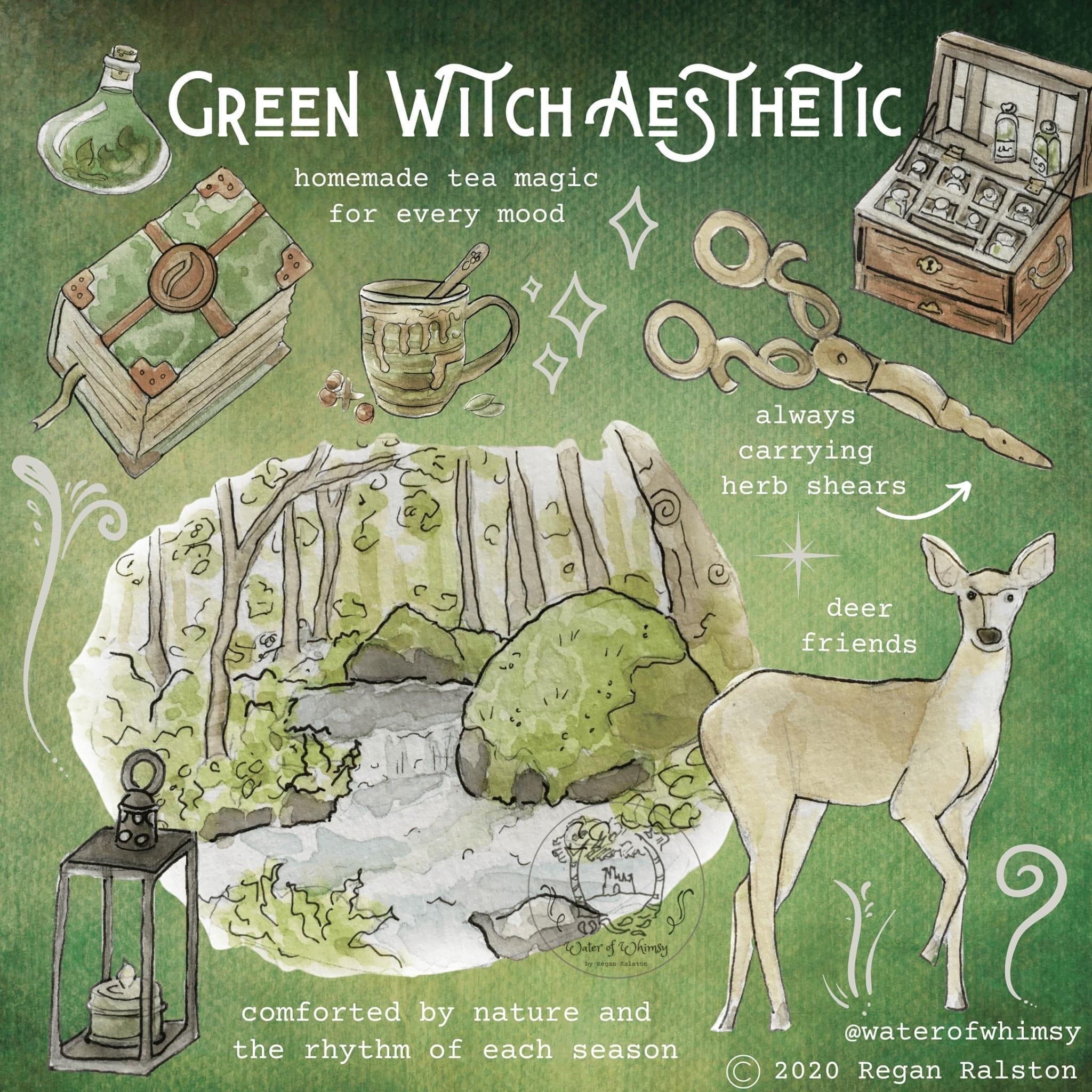
The green witch turns attention toward the living world. Plants, growing seasons, natural signs, and the character of a particular place become materials for practice.
What interests me here is the listening. Before deciding what something ought to do for you, you pay attention to what it is, how it grows, and what conditions allow it to thrive.
That asks for a different relationship with your materials. A garden cannot be bullied into ignoring its needs. You can announce your intentions over a dying plant all afternoon, but eventually somebody needs to check the soil.
I see a discipline here that travels beyond gardening: learning to recognize possibility without forcing everything into the shape of your original demand.
The Cosmic Witch: Looking at the Larger Clock
The cosmic witch moves the conversation outward, toward planetary placements, birth charts, cycles, and celestial correspondences.
What catches my eye is the attempt to work with a larger architecture. The practitioner looks beyond the immediate moment and asks where it sits within a wider pattern.
In my reading, this is the difference between wanting something to happen and considering the conditions surrounding its arrival. Timing becomes part of the craft. So does the relationship between the individual and the larger system they believe they inhabit.
The kitchen witch is stirring dinner. The cosmic witch is looking at the clock above the whole house.

The Angel Witch: Working with Order and Message
The angel witch brings attention to light, spiritual guidance, celestial hierarchies, and the movement of messages through an ordered spiritual framework.
My interest here is in the conduit: how something is received, understood, and carried into action. A message can become muddled by the messenger’s vanity, fear, or need to be important. In the Captain’s interpretation, keeping that channel clear is part of the work.
Who is being served? What is being communicated? What does the guidance ask you to do?
That gives this path a practical edge for me. Spiritual language can become elaborate very quickly. Carrying a useful message faithfully asks something more of the practitioner than sounding impressive.

The Chaos Witch: Knowing When to Break the Frame
The chaos witch is the one that catches an especially mischievous light through my goggles.
Here, belief can function as a tool. A symbol or framework can be adopted for a purpose, worked with, and released rather than preserved forever simply because it once proved useful.
What appeals to me is the refusal to confuse the instrument with the entire universe. A practice can become stale. An inherited rule can outlive its usefulness. Sometimes the thing obstructing the work is the structure that originally helped it happen.
There is craft in building a system. There is also craft in recognizing when it needs dismantling.
From Private Practice to Public Enchantment
There are other paths that invite a more personal dive. What I associate with demon witchcraft leads me toward darker inward territory and questions of shadow work. That deserves its own attention.
For this article, I am following the threads that bring me back into everyday life.
We have already considered food, living materials, timing, messages, and belief. So why should the conversation stop when we reach appearance, performance, reputation, and the ability to move a crowd?
That is where Nashville comes into focus.
The Nashville Glamour Witch: Some Altars Have Stage Lights
I think people miss the glamour witch because they expect magic to keep a lower profile.
They recognize a candlelit ritual. Then someone walks onto a stage, changes the atmosphere, gathers hundreds of wandering minds into one feeling, and leaves people carrying that feeling home.
Through the Captain’s goggles, that deserves a place in the conversation about enchantment.
Nashville is where this archetype becomes especially vivid to me. Voice, clothing, movement, personality, setting, and timing come together to create a presence. The practiced glamour witch knows how to make an entrance mean something before the first song begins.
And the work extends beyond the stage. Some people can make a conversation feel like an opening into another life. They attract opportunity, become friends and allies of influential people, and find themselves welcomed into rooms others spend years trying to enter.
I see craft in that. Beauty alone does not explain it. Someone can be striking and leave no impression beyond a photograph. Someone else can make a room lean closer.
Dismiss those people as merely glamorous, and I think you may overlook what they have learned to do. Some practitioners guard a little circle of magic. Others put theirs under the brightest lights they can reach.
Some altars have stage lights.
Dolly Parton: The Glamour That Gave Something Back
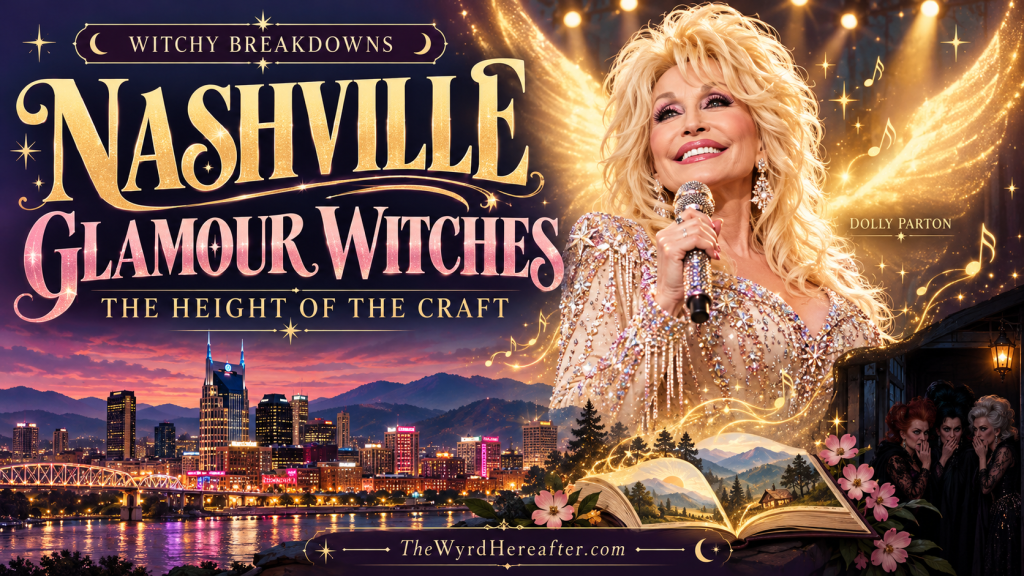
If you want my personal example of glamour witchcraft at its highest Tennessee expression, I would point straight to Dolly Parton.
Through the Captain’s goggles, Dolly brought glamour witchcraft and angel witchcraft together. The presentation caught your attention. The warmth gave you somewhere to put it. The generosity made something happen beyond the performance.
She understood the work of maintaining a presence: the hair, the clothes, the voice, the humor, the unmistakable silhouette. Decades into her career, she could still enter a room as entirely, magnificently Dolly. To my eyes, that beauty reflected an ongoing practice of presentation and upkeep. The enchantment had somebody tending it.
But what interests me most is how far that glamour reached—and what she carried across the bridges it opened.
Her Christianity felt welcoming to me. I saw a live-and-let-live spirit that could hold faith without needing to make everybody else smaller. That is where I felt the angel-witch presence: in the relationship between spiritual conviction and practical kindness.
Consider her Imagination Library. Founded in 1995, inspired by her father’s inability to read and write, the program continues giving free books to children. A child receives a story, a parent gets another opportunity to read with them, and imagination gets something to grow on.
Through my understanding of magic, that is a powerful working. You use what you have gathered to put possibility into somebody else’s hands.
Then there is Dollywood, in Pigeon Forge, near the Great Smoky Mountains. Those mountains were her home territory, and she helped build a destination that brought people back into it.
Now put the Captain’s goggles on: a place of music, delight, spectacle, and family memories at the edge of those mountains? That looks like an offering fit for fairy territory to me. If I were imagining how somebody might court the favor of the fairies, creating a place where people arrive ready to be enchanted would be a remarkable start.
That is my reading of the symbolism. It is part of why Dolly’s presence felt witchy to me in a way that reached well beyond a stage costume.
She could gather attention on an extraordinary scale, maintain a character people loved, and turn that affection into opportunities for others. Her glamour had somewhere generous to go.
For me, she sets an almost impossibly high bar for Tennessee glamour witchcraft.
And she makes the difference between glamour and hag witchcraft especially clear: imagine having that much attention and choosing to give children books instead of giving everybody somebody to hate.

The Hag Witch: False Glamour Enforced Through Fear
The other side of that Nashville picture, in my experience, is the hag witch.
Sometimes I see this pattern growing out of frustrated glamour: someone wants recognition, influence, and exceptional treatment, but cannot cultivate or sustain the presence that would draw those things willingly.
So the ambition retreats into a smaller kingdom.
A corner of a scene. A tightly guarded fandom. A little court where knowing the right people matters more than making anything worth knowing.
The tools become gossip, ridicule, exclusion, and cruelty. Somebody else’s embarrassment supplies an evening’s entertainment. Somebody else’s growing confidence becomes a problem to manage. The aspiring scene queen establishes importance by deciding who gets welcomed, who gets mocked, and whose reputation is next on the table.
That is what I mean by hag witchcraft: false glamour enforced through fear.
Admiration is demanded. Disagreement has consequences. People learn to flatter the person whose next conversation might make their social life unpleasant.
I have also noticed, among people I associate with this pattern, poor self-management alongside that appetite for managing everybody else. Self-reflection gets neglected. Care gets neglected. Resentment begins to wear on the whole presentation.
The haggardness I am describing belongs to that larger pattern of neglect and behavior. A tired face has never told me somebody’s character. Watching how they use a little power tells me considerably more.
I have seen these habits fail to carry people very far in steady professional work, too. A job eventually asks for reliability, cooperation, and something delivered. Being feared in a small social circle does not necessarily help with any of those things.
Which leaves me with a question: does your power travel with you, or does it depend on keeping everybody inside your particular corner?
And if you recognize your own practice in this description, I think it deserves some serious questioning. What does your influence produce? Who leaves your company stronger, more capable, or more inspired? What would remain of your importance if you stopped discussing other people’s shortcomings?
If the room needs a target before you can feel powerful in it, what exactly have you learned to conjure?
The same attention used to spread a rumor could introduce somebody’s work. The same knowledge used to guard a doorway could help somebody find their way through it. There is room to change the practice—but that begins with being willing to examine what it has become.
Loki and the Craft of Tricky Things
At the core of my own understanding, witchcraft means getting magic out of things that are tricky to get magic out of.
That is the thread I see running through this whole discussion. Making nourishment out of what is available. Working patiently with something alive. Reading a larger pattern. Carrying a message clearly. Releasing a belief that has become a cage. Creating a presence that makes people feel possibility.
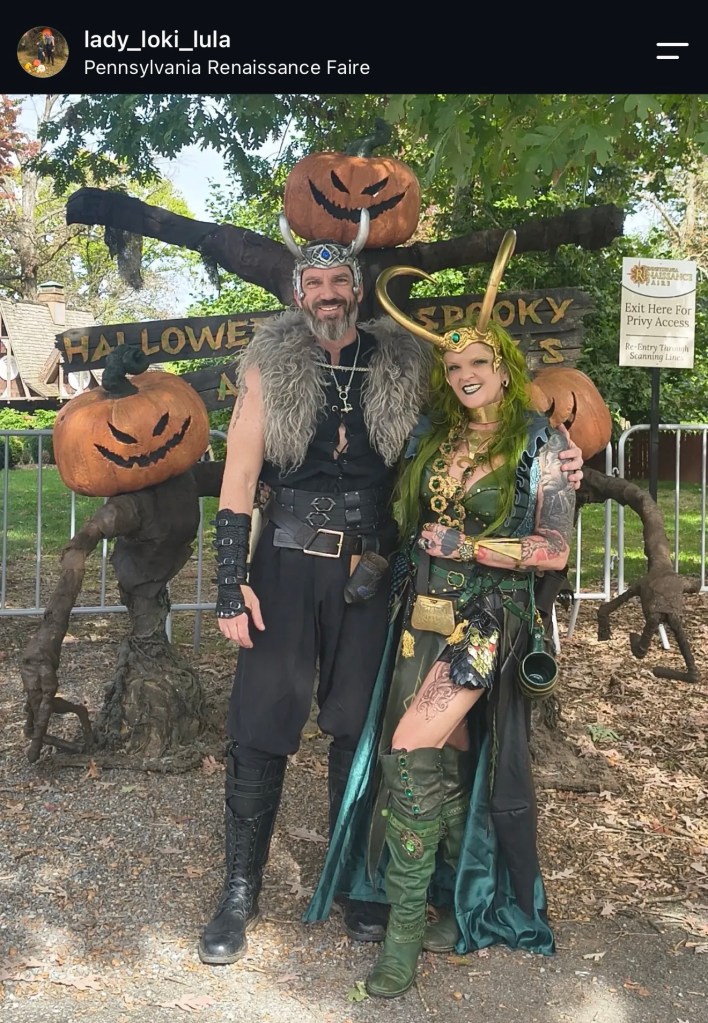
It is also why I see Loki as a witch god hiding in plain sight. In my understanding of him, trickiness belongs at the center of the craft: the unexpected opening, the difficult material, the possibility everybody else walked past.
And it brings me back to the difference between Nashville’s stage and its bitter little court.
What are you getting out of the room? What are you putting into it? Does somebody else’s light give you something to celebrate, or something to extinguish?
I would rather leave people with more life in them than they brought through the door.
That seems like magic worth practicing.
Video discussed: Every Type of Witch Explained in 12 Minutes. The Nashville archetypes, connections, and interpretations presented here are the Captain’s perspective.

